Partner Story · in conversation with Teydra Lab, the company behind OpenAutark. This is a written interview submitted through Submit Your Story. The claims below are the company's own, presented as they were given to us. No payment was involved.
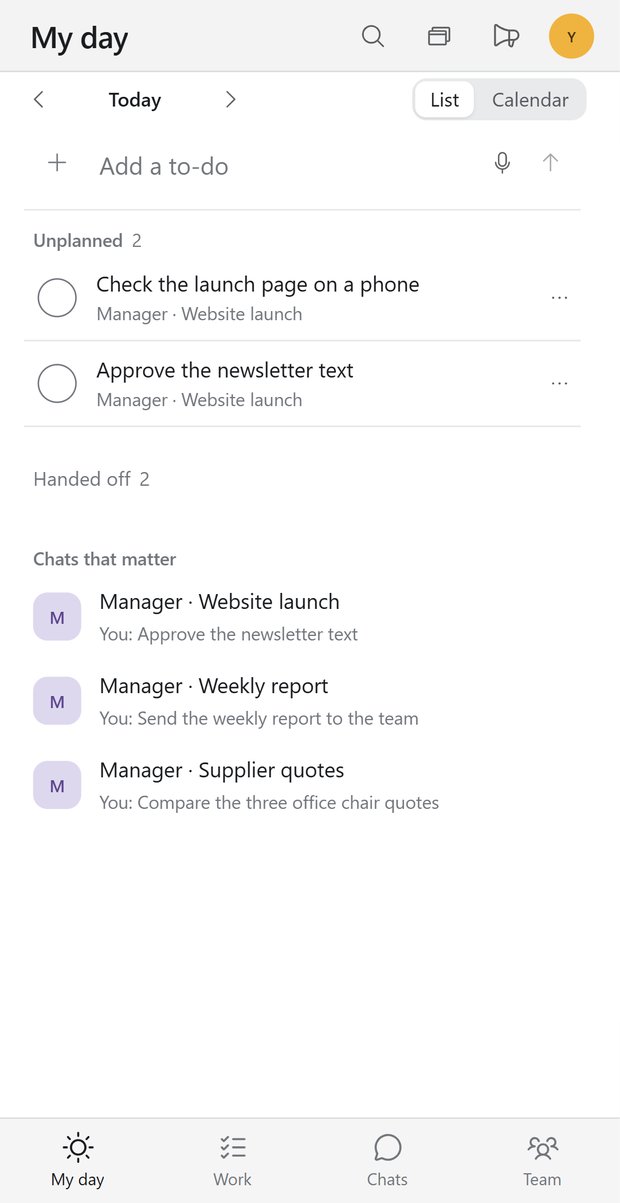
The Autark interface in a mobile browser view, with illustrative demo data, captured on 7 November 2026. Image: Teydra Lab.
A monthly AI subscription buys a very capable assistant and a lot of leftover chores. You move context from one chat to the next. You repeat your instructions. You copy the results somewhere useful, and you are the only one who remembers what was left unfinished on Tuesday.
"A useful answer is not necessarily a finished task," is how Teydra Lab puts it.
OpenAutark is built around that gap. The free desktop application from Teydra Lab in Salzburg, Austria, organizes AI agents as a lasting team. Each agent has a role, a memory and a list of tasks, and a manager agent coordinates the work. You give the team an outcome, then keep track of what was done, what is still open and what needs a human decision.
A colleague instead of an empty chat window
The basic unit in OpenAutark is a colleague with continuing responsibilities. A manager and specialist agents can keep separate jobs, remember the context that matters to them and hand work to each other.
In the app, you type or dictate a request into one inbox. The manager can split a long sentence into separate tasks and give each one an owner: an agent, or your own to-do list, called My day. Agents can wake up on schedules, timers, messages and events while your computer is on, and the steps they take land in a journal you can read. In the morning, a briefing tells you what was done and what needs you.
Around that sit the tools a small team would expect: direct and group chats, a calendar, a browser beside the chat, your own mailbox, connected apps through MCP, and an encrypted catalog that lets agents refer to a password by an ID instead of seeing the value.
Where the AI sits, and who gets paid
The models do the reasoning and the writing, choose tools and carry out the steps. OpenAutark supplies everything around them: the roles, conversations, memory, tasks and coordination.
The money side is simple. Autark costs nothing to download, needs no account with Teydra Lab and has no subscription of its own. The AI bill stays with whichever provider the user already pays. Teydra Lab's argument is that most people pay for a ChatGPT or Claude plan every month, and that its limits reset whether they were used or not. So the app can spread work across connected accounts, and the plan that resets soonest goes first.
The team is also not tied to one vendor. Existing coding-assistant accounts, API keys and supported local models are separate routes. For a ChatGPT plan the app works through OpenAI Codex. For a Claude plan it starts a locally installed Claude Code process, which uses the user's own account, and passes the app's tools to it through an MCP hub.
The whole thing runs on the user's computer, with desktop versions for Windows, macOS and Linux, an Android app, and a web app for iPhone served from your own PC. The source code is public under the Apache 2.0 license. Connected cloud models still receive the prompts they work on, so "local" describes where the application and its storage live.
What the team has actually done
Teydra Lab's clearest evidence is its own daily use. In one recent week, it says, its agent team found a press enquiry that had been overlooked, checked a book's print file, and researched, wrote and sent outreach messages. Most of that work is assigned through a manager agent, and the phone is one way to reach it. There is no technical approval gate: agents act with the user's permissions, so not every action waits for a person's approval.
The company also has outside recognition. In October 2026, Teydra Lab won the Startups category at the Austrian Innovation Forum, in the Crowd in Motion challenge "Beyond Optimization."
The lesson: evidence has to travel with the result
Running its own company on the product taught Teydra Lab where agents go wrong, and it is a lesson worth stealing for anyone delegating work to AI.
A prepared message, a server's acceptance of that message and a reply from the recipient are three different outcomes. An agent can report all three in the same confident voice. So the team now keeps the exact outgoing text and its identifying evidence, and checks previous contacts before anything is sent.
"Evidence must travel with a result," the company says. Agents, in its view, need to tell apart what they intended, what they did and what was verified. Sounding sure about a finished task is the easy part.
Where it stands today
OpenAutark is at version 0.3.4, free to download, and early. Teydra Lab is direct about the boundaries, and asks that they be stated. Agents act with the user's own permissions, so the app should not be treated as a sandbox or as a guaranteed approval gate. The company's testing has not yet established a complete end-to-end workflow with real providers from a phone to a PC, or unattended across several devices. And on the Claude route, it says it has not established that every aspect of the integration meets Anthropic's conditions. One specific open question is the synchronization of credential files between a user's paired computers. Anyone connecting a Claude plan should check those terms for themselves.
What comes next
The next priority is to make existing workflows easier to inspect and more dependable, resolve the open integration questions and document what has and has not been tested.
Teydra Lab is asking users for something specific: a task that failed, a handoff that lost context, or a model connection that behaved unexpectedly. "An inspectable failure is more useful than an unsupported claim that the team can do everything," the company says. Downloads and source code are at openautark.com.
---
This is a Partner Story: a written interview with a company building with AI, submitted through Submit Your Story and published free of charge. Statements about the company's product, users and results are its own. Building something with AI? Tell us about it.
Would you try this product?