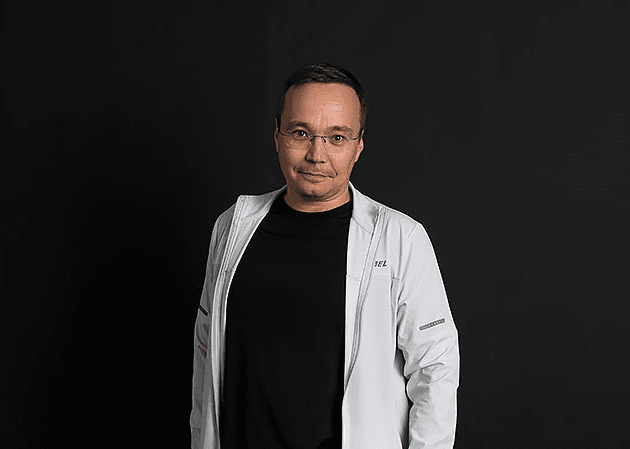
Sergei Ponomarev, PhD
Methodologist of technology adoption
I am a methodologist. My work has long centred on one question: how a new technology actually gets adopted inside an organisation, not on paper but in practice.
I defended a PhD on e-government in 2014 and worked at the origins of Russia's administrative reform: rolling out new digital public services, monitoring how they performed in the field, and building the methods to evaluate them, from quality standards to independent assessments and test purchases. For the past two years I have applied the same discipline to AI, building agents and workflows hands-on.
The core problem has not changed. A technology arrives, everyone agrees it matters, and then the real work begins: turning it into methods, standards and processes a company can actually use and measure.
Partner for methodology and development in Central and Eastern Europe at NeoMundi, a French AI metrology company.
Sveti Vlas, Bulgaria · remote, any time zone · Russian and English
Selected work
- AI Agent Test Purchase
The method, published in full
- Your Company's AI Through the Customer's Eyes
For business owners adopting AI
- Demand the AI Receipt
For customers dealing with company AI
What I can do for you
Some of this is packaged and priced; most of it is agreed case by case.
Test purchases of AI agents
An independent check of whether your customer-facing agent keeps the promises your company published, with verbatim evidence and a fix list.
How the test works →AI agents and workflows, built
Hands-on development of agents, automation and agentic pipelines, and the testing that confirms they behave.
Standards and implementation methodology
The documents an organisation needs to adopt AI in a measurable way: a public AI Policy, a service passport per service, and a receipt per interaction.
Monitoring and evaluation
Frameworks for measuring whether a programme or a service does what it was meant to do, carried over from seven years of public-service monitoring.
Research and independent assessment
Comparative studies, field research and evaluations for companies, universities, consumer bodies and the social sector.
AI visibility audit
How AI search engines read and cite a website, measured across eight signals with the fixes in priority order.
Run a scan →How I work
I start from the decision, not the tool
Every engagement is designed backwards from what you need to decide. There is no standard package: scope, timing and terms are agreed case by case, and I adapt to how your organisation actually works.
You deal with me directly
The person who designs the work does it and writes the report. That is the advantage of a practitioner over an agency, and the limit of one too.
Every claim carries its evidence
Findings are quoted verbatim and reconciled against records. Nothing rests on an impression, and uncomfortable results are presented in a form you can act on.
The limits are stated, not hidden
Where a method cannot answer a question, the report says so. A conclusion is worth exactly as much as what stands behind it.
Credentials
Education
- PhD in Political Science, Lomonosov Moscow State University. Dissertation on e-government and technology adoption in public administration.
- MA in Political Science, Moscow School of Social and Economic Sciences, validated by the University of Manchester.
- Specialist in Political Science, Perm State University.
- Fellowship on government openness, Kennan Institute, Washington, D.C.
Academic publications
- “Monitoring the Quality and Accessibility of State and Municipal Services”, co-authored, HSE Publishing House
- “All-Russian Monitoring of the Introduction of Administrative Regulations”, HSE, Moscow
- “E-Government: Administrative and Civic Practices in Contemporary Russia”, PhD dissertation
- “Open Government: Theoretical Model and Russian Practice”, Political Science Yearbook, Russian Association of Political Science
- “Problems of Introducing ICT into Public Administration in Russia: Is E-Government Retiring?”, Ars Administrandi
- “Crowdsourcing: Administrative, Political and Civic Practices in Contemporary Russia”, Bulletin of Perm State University
- “The State on the Net: New Institutions of Communication”, Vlast (Power)
- “Government and NGOs: New Forms of Cooperation in Poland and Russia”
More than 30 publications in total.
International programmes and fellowships
- United States, Open World programme and open-government study visits, Washington, St. Louis and New York
- United Kingdom, John Smith Trust Young Leaders Programme, London; and Oxford
- Council of Europe, Summer University of Democracy, Strasbourg
- France, Global Social Business Summit and public administration programmes, Paris
- Germany, Action Reconciliation Service for Peace and Moscow School of Civic Education, Berlin
- Taiwan, social entrepreneurship seminars, National Taiwan University, Taipei
- Norway, public oversight in the management of natural resources, Oslo
- Spain, municipal governance and territorial development, Segovia
- Croatia, European practices of social entrepreneurship, Zagreb
- Poland, training programme for policy and opinion makers, Warsaw
- Latvia, civic education seminars, Riga
- Bulgaria, Centre for Liberal Strategies, Sofia
- Georgia, John Smith Trust alumni meeting, Tbilisi
Over 20 programmes across 12 countries.
Get in touch
Write to infoaibusiness.vc or connect on LinkedIn.