For two years the story of the AI boom had a painful subplot for Europe: the frontier models were American, the cheap robots were Chinese, and the continent that invented the industrial revolution looked like a spectator in the next one. Then, in June 2026, a company most people have never heard of, Neura Robotics, based in a small town near Stuttgart, raised up to $1.4 billion in a single round and quietly became Europe's answer to Tesla and China. The check-writers tell you how serious this is: Nvidia, Amazon, Qualcomm, Tether, Bosch, Schaeffler, and the European Investment Bank all piled in.
Here's why this belongs on a site about money and not just a robotics blog. Neura's flagship humanoid, a Porsche-designed machine called the 4NE-1, has a price tag, about €98,000, and an order book already north of €1 billion. That combination, a real price and real demand, is what turns "cool robot video" into "spreadsheet you can actually run." So let me walk you through what happened, who's funding it and why, and the number that matters most: what a €98,000 robot worker actually costs you versus a human, and when it pays for itself.
What just happened
The bare facts first, because they're staggering on their own. Neura Robotics closed a Series C of up to $1.4 billion, the largest humanoid-robotics raise in European history. The round vaulted the company to a valuation of roughly $7 billion, up from about $4 billion just eight months earlier. That's a 75% jump in valuation in well under a year, the kind of repricing that only happens when big, strategic money decides a category is about to inflect.
And this isn't a science project burning cash with no customers. Neura disclosed an order backlog and deployment pipeline exceeding €1 billion, and it's using the money to scale from boutique volumes to what it calls "multi-million" serial production, with a stated goal of 5 million robots by 2030. Part of the capital goes to rolling out "Neura Gyms", training environments where its robots learn physical tasks, the company's bet on what everyone now calls physical AI. Whether it hits those numbers is a fair question (more on that below), but the ambition, and the €1 billion of signed demand behind it, is real.
Who's writing the checks, and why
The investor list is the tell. When you see who's funding Neura, you understand this isn't a punt, it's a set of strategic bets by companies that each win a different way if humanoids take off.
| Backer | Why they're really in |
|---|---|
| Tether | The crypto giant led the round, a cash-rich player diversifying its balance sheet into physical AI |
| Nvidia | Every one of these robots runs on its chips; funding the customer that buys its "brains" |
| Amazon | Runs the largest warehouse operation on Earth, the single biggest potential buyer of robot labor |
| Qualcomm | Wants its edge-AI silicon inside robots, the same chip-layer land-grab behind its $10B Tenstorrent bet |
| Bosch + Schaeffler | German industrial titans, both future customers and manufacturing muscle |
| European Investment Bank | EU public money chasing "strategic autonomy" in robotics: Europe not wanting to depend on the US or China |
Look at that mix and the logic jumps out. Nvidia is doing exactly what I described in its record earnings, seeding the ecosystem that buys its silicon. Amazon is investing in the labor force that could run its fulfillment centers. And the European Investment Bank showing up is a statement of policy: the EU wants a homegrown humanoid champion so it isn't left buying its robot workforce from Shenzhen or Fremont. When strategic buyers, chipmakers, and a government bank all fund the same company, they're not betting on a product, they're betting on an industry.
Meet the €98,000 worker
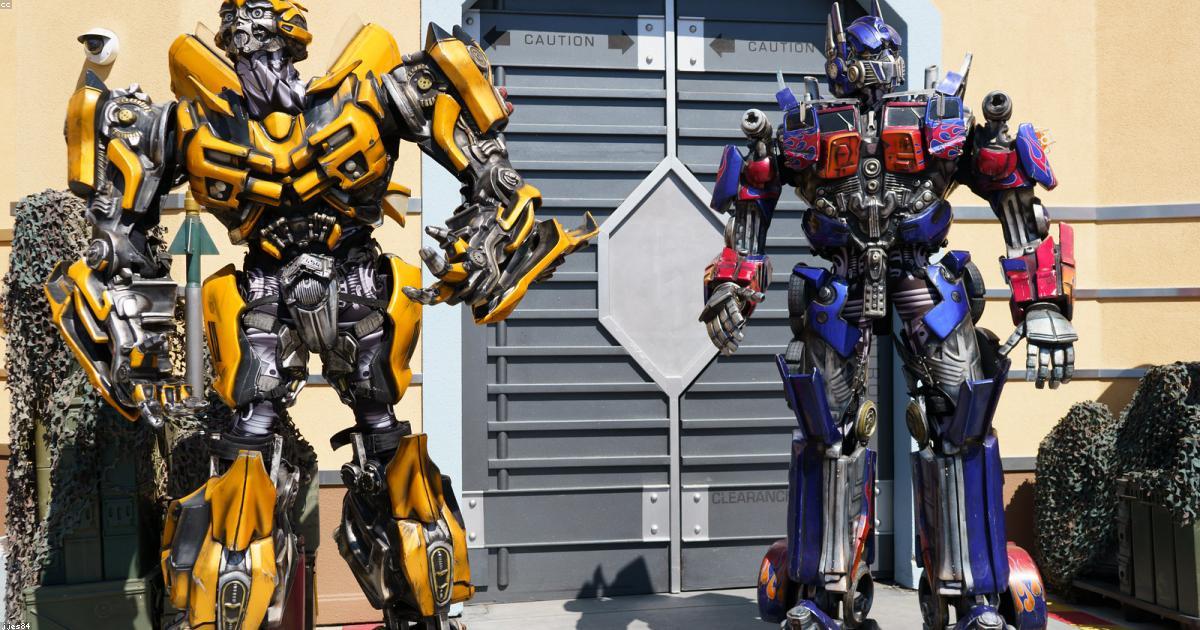
So what does $1.4 billion actually buy? A humanoid called the 4NE-1 (say it out loud, "for anyone"), styled by Studio F.A. Porsche and now shipping in its Gen 3.5 version. Neura frames it not as a remote-controlled gimmick but as a "cognitive robot", a machine meant to perceive, reason about, and act in a messy human environment, learning tasks in those Neura Gyms rather than being hand-coded for one motion.
Two things make it commercially interesting beyond the spec sheet. First, it reportedly carries the heaviest payload in its class, which matters enormously for real industrial work, lifting, moving, loading. Second, and unusually for this field, Neura publishes a transparent price: about €98,000 (roughly $106,000). Most of its rivals hide behind "contact sales" or per-hour pilots. A published sticker price is what lets a factory owner or logistics manager do the one calculation that decides everything, and that calculation is where we go next.
The money math: when does a robot pay for itself?
Here's the part you actually came for. Forget the sci-fi; run the numbers like you'd run them on any capital purchase. A €98,000 robot only makes sense if it replaces or augments enough labor to earn its keep. So let's compare it honestly to a human worker in a Western European factory or warehouse.
| Line item | Human worker | 4NE-1 robot |
| Upfront cost | ~€0 | ~€98,000 |
| Running cost per year | ~€45,000 (pay, tax, benefits) | ~€5,000 (energy, maintenance) |
| Hours available | ~1 shift, sick days, holidays | Multiple shifts, no sick days |
| Year 1 cumulative | ~€45,000 | ~€103,000 |
| Year 3 cumulative | ~€135,000 | ~€113,000 |
| Year 5 cumulative | ~€225,000 | ~€123,000 |
Read the cumulative rows, because that is where the two lines cross. The robot starts far behind: €98,000 on day one against a human's zero. But it then costs about €5,000 a year to run against roughly €45,000 in loaded wages, so the gap closes by about €40,000 every year. Set the two cumulative totals equal and the robot overtakes the human at roughly two and a half years, on a strict single-shift, one-for-one basis. By year five the robot has cost €123,000 against the human's €225,000.
Stated the other way, if you prefer an annualised figure: spreading €98,000 over a five-year life is about €19,600 a year, plus €5,000 of upkeep, so roughly €25,000 a year all-in against €45,000 for the human. Use one framing or the other, not both, since the purchase price is either paid upfront or amortised, never counted twice.
And this still understates the machine. A robot does not work one shift. Run it across two and it covers the work of roughly 1.5 to 2 people for the same €5,000 of upkeep, which pulls the crossover down to little more than a year, after which it is close to pure savings.
This is exactly the ROI pattern I've documented before, in how farming robots pay for themselves in one season and the warehouse-worker replacement math. A humanoid is a capital asset that converts a recurring labor bill into a one-time purchase plus cheap upkeep. The €1 billion order book isn't idealism; it's companies who've run this arithmetic and decided the machine is cheaper than the payroll.
The global humanoid scoreboard
Neura isn't alone, and to understand the bet you need the board. The humanoid race has split into three camps, European, American, and Chinese, each with a different strategy:
| Company | Region | Flagship | Price | Status (mid-2026) |
| Neura | Europe (Germany) | 4NE-1 (Porsche design) | ~€98,000 | Serial-production ramp; €1B+ order book |
| Figure | US | Figure 03 | Per-hour commercial | Paid duty at BMW; BotQ factory ~1 robot/hour |
| Tesla | US | Optimus Gen 3 | Not for sale yet | Fremont production late 2026; 100K-300K target |
| Unitree | China | H2 | Under $41,000 | 5,500+ shipped in 2025, more than everyone else combined |
The split is stark. The Chinese approach, led by Unitree, is to win on price and volume, with the smaller G1 at around $16,000, the larger H2 under $41,000, and thousands already shipped, the manufacturing-scale advantage I unpacked in why China builds humanoids cheaper. The American approach, from Figure and Tesla, is high-tech pilots and vertical integration, with Tesla's wildcard 100K-300K production target that could reset the whole cost curve if it lands. Neura's European play sits in between: premium, heavy-duty, transparently priced, and crucially, built for the regulatory world it's born into. For the full field, I keep a running humanoid price comparison.
Europe's real edge: built for the rules
Here's the strategic angle that makes Neura more than "the European one." It's designing its robots to be compliant with the EU AI Act from day one, a "cognitive robot" wrapped in a governance model built for European rules. That sounds like a compliance footnote; it's actually a moat.
Think about who buys industrial robots in Europe: Bosch, Schaeffler, BMW, the big regulated manufacturers. Those buyers can't deploy a black-box machine that might fall foul of the AI Act rules the EU just reshuffled in its Digital Omnibus. A robot that arrives pre-built for that regulatory reality is far easier to sign off on, it's the physical-world version of the governance-clarity advantage I wrote about for smaller firms. While Chinese makers win on price and Americans win on hype, Neura is quietly winning on procurement approval in the world's most regulated market. That €1 billion order book from cautious European industrials is the proof it's working.
How to actually play this
Depending on who you are, here's the practical read, because a $1.4 billion round is a signal you can act on, not just read about.
If you invest, the humanoid sector just got its clearest European pure-play, and the valuation re-rate ($4B to $7B in eight months) tells you where sentiment is heading. But Neura is private and milestone-gated, so most people can't buy in directly. The cleaner exposure is the picks-and-shovels layer, the chipmakers (Nvidia, Qualcomm), the component suppliers, and the industrials, the same "own the whole trend, not one bet" logic in how to invest in the robot boom. The robots are the story; the suppliers are often the safer trade.
If you run a business with physical labor, this is the one to watch closely, because a transparently-priced, heavy-payload humanoid is exactly what makes the ROI math above real. You don't need to buy one tomorrow, but you should be modeling what a €25,000-a-year tireless worker does to your cost structure over five years, before a competitor does. The warehouse and logistics economics are moving fast.
If you're thinking about your own job, be clear-eyed rather than alarmed. Humanoids land first on the heavy, repetitive, physically-taxing tasks, exactly the roles the money math targets first. That's the same displacement curve I've tracked across which jobs AI and robots hit. The durable move is the one that keeps repeating on this site: get on the side that directs, maintains, and deploys the machines rather than competing with them on lifting boxes.
The honest take
I want to be straight about the risks, because a $1.4 billion headline can paper over a lot. First, the funding is contingent on milestones: Neura gets the full amount only if it performs, which is a polite way of saying the check has strings. Second, the gap between "€1 billion order book" and "5 million robots a year by 2030" is enormous; the entire Western humanoid industry has a habit of dazzling in demos and stumbling in mass production, while China quietly out-ships everyone. Building millions of reliable humanoids is a manufacturing problem, and manufacturing at scale is precisely where Europe has struggled and China has dominated.
But here's what I keep coming back to. For two years the humanoid story was a two-horse race between American ambition and Chinese scale, and Europe wasn't in it. A $1.4 billion round backed by Nvidia, Amazon, Qualcomm, and the EU's own bank changes that, not because the robot is guaranteed to win, but because the smartest strategic money on the continent just decided physical AI is too important to cede. The €98,000 price tag and the €1 billion order book mean this has crossed from vision into commerce. The robots are being ordered, the math is being run, and the only real question left is how fast.
So here's the one worth sitting with: if a tireless worker that costs €25,000 a year and never calls in sick is now a line item you can actually order, with a price, a lead time, and a Porsche badge, how long before not having a plan for it becomes the expensive choice?
Sources: NEURA Robotics: Record Series C; CNBC; Manufacturing Dive.