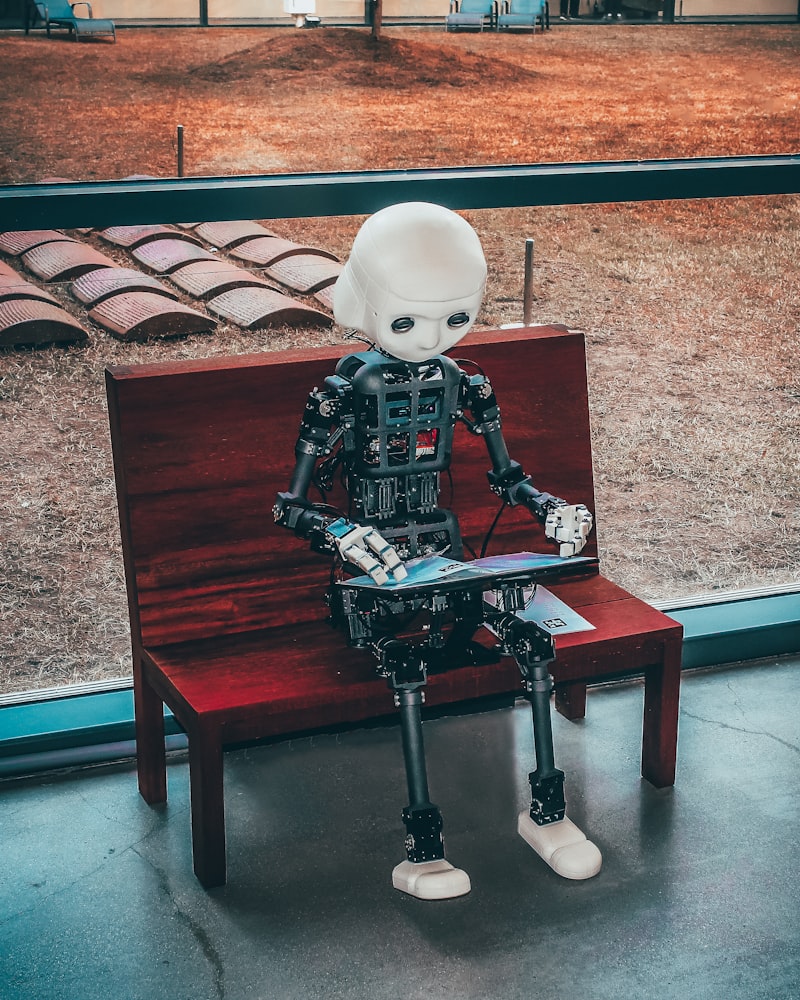
For the first time in history, you can pre-order a humanoid robot to live in your house. Not a Roomba, not a smart speaker, a five-foot, two-armed robot that walks around your home, opens doors, fetches things, and (eventually) folds your laundry. It's called the 1X Neo, it's backed by OpenAI, and it starts shipping to US homes in late 2026 for $20,000 outright or $499 a month.
The internet lost its mind over the demo videos. And I want to walk you through this one carefully, because it's the most important consumer-robot moment yet, and also because there's a detail in the fine print that changes the entire story. The short version: that robot isn't as alone in your living room as it looks. There's often a human hiding inside it. Let me explain what you'd actually be paying for, whether the money makes sense, and what this tells you about where the whole robot economy is heading.
What you actually get for $499 a month
Let's start with the product, because it's genuinely impressive on paper. The Neo is built by Norwegian company 1X Technologies, it's soft and lightweight (designed to feel less "creepy" and be safe around people), and at launch it can do a real set of useful things autonomously: open doors, fetch items, turn lights on and off, navigate your home, and help in the kitchen with simple tasks.
Here's how the pricing shakes out against the other humanoids you've heard about:
| Robot | Price | Target | Reality in 2026 |
|---|---|---|---|
| 1X Neo | $20,000 or $499/mo | The home (consumer) | Ships late 2026, 60-70% autonomous |
| Tesla Optimus | $20,000-$30,000 (target) | Home + factory | Public sale targeted end of 2027 |
| Unitree G1 | ~$17,990 (on Amazon US) | Developers/business | Shipping now |
| Figure 03 | Not sold to consumers | Factories (BMW) | Already on production lines |
What makes the Neo different from everything in that table is the intent. Tesla talks about the home but is really shipping to factories first. Unitree sells to developers. Figure is pure industrial. The Neo is the first one designed, priced, and marketed to land in your house, doing your chores. That's the milestone. It's the iPhone-moment framing for home robots, and OpenAI's backing is exactly why it's getting so much attention.
The catch nobody puts in the ad: a human is finishing your chores
Now the part that changes everything, and the reason I'd pump the brakes before you put down a deposit.
The Neo is only about 60-70% autonomous at launch. When it hits a task its AI can't handle, which, for anything beyond simple fetch-and-carry, is often, it phones home. A trained human "Expert Mode" operator at 1X takes remote control of the robot and completes the task for it. Your laundry gets folded, yes, but sometimes by a person in an office somewhere, steering the robot in your bedroom through its cameras.
Sit with what that means for a second. A stranger can, with your permission, see and operate a machine inside your home. Reviewers have been blunt about the gap between the glossy marketing and the teleoperated reality, one called it "the $20,000 robot that needs a human babysitter." The autonomy will improve over time (every teleoperated session becomes training data, which is genuinely clever), but in 2026 you are buying a developing platform, not a finished butler.
I'm not saying that to trash it. I'm saying it because the honest version is the useful version. This is the same "shipping versus promising" gap I broke down in Figure vs Tesla Optimus, except here the gap is being quietly filled by remote humans, and you deserve to know that before you decide.
The money math: is $499/month actually worth it?
You're on a site about money, so let's run the real numbers instead of vibes.
$499/month is about $6,000 a year. What does that buy in human terms? A part-time house cleaner at $30/hour for, say, 4 hours a week runs roughly $6,200 a year, almost exactly the same. A nanny or full-time helper costs far more. So at first glance, the Neo is priced right at the line of a part-time human helper.
But here's the honest catch on the value side: a $30/hour cleaner today does the whole job, reliably, without you supervising. The Neo in 2026 does maybe two-thirds of it autonomously and needs babysitting (or a remote operator) for the rest. So you're paying cleaner-level money for a sub-cleaner-level result, today. The bet you're making is on the trajectory: that the same $499/month robot gets meaningfully more capable every month as the AI learns, until one day it quietly crosses the line where it genuinely replaces that $6,000 of human help and then keeps going.
| The Neo value question | Today (2026) | The bet (2028+) |
| Annual cost | ~$6,000 | ~$6,000 (or owned outright) |
| Comparable human help | Part-time cleaner | Full-time helper ($40K+) |
| Autonomy | 60-70%, needs babysitting | Approaching full |
| Verdict | Pay full price for partial value | Pay the same for far more |
If you can afford it and you love being early, that trajectory bet might be worth it. If you need the chores actually done now, hire the human and wait two years. That's the genuinely honest answer.
The privacy question you have to ask first
Before the money, before the chores, there's a question I'd want answered in writing: who is watching, and what are they keeping?
A teleoperated robot is, by definition, a set of always-on cameras and microphones walking through the most private space you own, your bedroom, your kids' rooms, your bathroom hallway. When Expert Mode kicks in, a remote human sees through those cameras to do the task. 1X says operators are trained and access is permissioned, and the soft, friendly design is partly meant to defuse exactly this "creepy" reaction. But you're still inviting a company's eyes into your home, and every session also becomes training data that lives on their servers.
This isn't a reason to panic, it's a reason to read the contract. What footage is stored, for how long, who can access it, and can you turn teleoperation off entirely (accepting less capability in exchange)? These are the questions that matter more than the spec sheet. It also lands the Neo squarely in the middle of the broader trust crisis around AI, when a machine in your living room can be operated by a stranger and records everything it sees, "do I trust this company?" stops being abstract and becomes the single most important feature. Demand a clear answer before a deposit, not after.
Why a home robot is really an AI story
You might wonder why a robot belongs on a site about AI and money. Here's the connection, and it's the whole point. The Neo's body isn't the hard part, 1X has built capable hardware. The hard part, the thing that decides whether this is a $6,000/year miracle or a $6,000/year gadget, is the AI brain. The reason it still needs human teleoperators is that the AI isn't smart enough yet to handle the chaos of a real home.
That's why OpenAI backing 1X matters so much: the bet is that the same wave of AI progress reshaping everything else will close the autonomy gap fast. And it's the same brain-versus-body split I described in why China builds the bodies so cheaply while America fights over the intelligence layer, the layer that runs on the NVIDIA chips powering every one of these robots. A home robot is just AI that finally grew legs and walked into your kitchen.
There's also a quieter angle worth naming: companionship. 1X explicitly designed the Neo to feel friendly and non-threatening, and for isolated or elderly people, a presence in the home is part of the pitch. That puts it adjacent to a business I've written about with real caution, the AI companion economy that monetizes loneliness. A robot that helps Grandma and keeps her company is wonderful; just keep one eye on where "help" ends and "monthly dependence" begins.
What this means for you
Depending on who you are, here's the move.
If you're a consumer with money to spend, treat the Neo like a 2026 electric car or a first-gen smartphone: exciting, genuinely useful in parts, and clearly a stepping stone to something much better. Pre-order if being early delights you and you'll forgive the rough edges. Wait if you want chores reliably done, the 2028 version will be dramatically better for the same price.
If you want to make money from this wave instead of spending on it, remember that the consumer robot is the flashy front end of a much bigger machine. The durable money is in deploying and servicing robots, not buying one for your kitchen, the playbook I laid out in how to make money in the robot business starting at $1,600 and the broader robot price-and-opportunity breakdown. The Neo just proves the consumer demand is real, which expands the whole market.
If you're an investor, the Neo is a demand signal, not a stock you can buy, 1X is private. The cleaner way to ride consumer-robot adoption is the component-and-platform layer underneath all of them, which I covered in how to invest in the robot boom without buying a robot and the AI ETF guide. When a robot finally hits every home, the people who sold the actuators, chips, and software win regardless of whose logo is on the chassis.
The honest take
The 1X Neo is a genuine milestone, the first time a humanoid robot is being sold, for real money, to live in ordinary homes. That deserves the excitement. But the gap between the demo and the reality is wide enough to drive a teleoperator through, literally. In 2026 you're not buying a robot butler; you're buying a 60-70%-capable platform with a human safety net and a promise that it gets better. Whether that's a brilliant early bet or an expensive beta depends entirely on how patient you are and how deep your pockets go.
What I'm certain about is the direction. The price will fall, the autonomy will climb, the teleoperators will fade into the background, and within a few years a capable home robot at $499/month, or far less, will feel as normal as a dishwasher. The Neo is the awkward, expensive, half-finished first draft of that future. And first drafts, in technology, are exactly where the people paying closest attention figure out where the money's going to land.
So before you put down that deposit, ask yourself the real question: are you buying a tool to do your chores today, or a front-row seat to watch the home-robot era begin? Be honest about which one, and you'll make the right call.