Partner Story · in conversation with Sistava. This is a written interview submitted through Submit Your Story. The claims below are the founder's own, presented as they were given to us. No payment was involved.
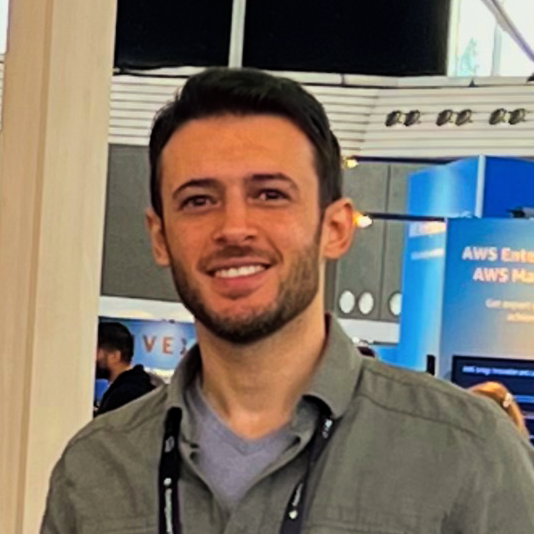
Mahmoud Zalt, founder of Sistava. Photo: courtesy of the founder.
The most useful thing Mahmoud Zalt has to say about AI agents is not about models, prompts or tools. It is about what happened when he gave several of them access to real work and watched what they did with it.
They were busy. Very little got finished.
"They could act, but had no shared way to prioritise, turn objectives into work, review work, or tell when something was complete."
Anyone who has joined a badly run company will recognise the result he describes: activity without enough progress, low-priority work getting done, and no reliable way to notice when a task had lost its purpose.
That failure reshaped the product, and it is worth understanding before anything else about Sistava, because it is the part almost nobody else in this category talks about.
The man who built the plumbing
Zalt is a Principal AI Architect based in the Netherlands, with more than 16 years building software, cloud infrastructure and AI systems.
Developers know his work even if they do not know his name. He is the author of Laradock, the Docker environment that has been a default starting point for PHP development for years, and of Apiato, a framework for building scalable APIs on top of Laravel. Both are open source, both have been adopted worldwide, and both are the kind of infrastructure that thousands of people rely on without thinking about who wrote it.
That background matters here, because the failure he describes is not the observation of someone new to shipping software. It is the observation of someone who has spent his career building the plumbing other developers stand on.
Nobody has a text problem
His framing of the market is blunt and, once you hear it, difficult to unhear.
"Most businesses do not have an AI problem because they cannot generate text. They have a work-completion problem."
The picture he draws will be familiar to every founder reading this. There are repetitive tasks that matter every week: researching a market, preparing a follow-up, updating a system, monitoring something, turning information into a decision. A chat answer helps with a piece of it.
Then the founder still has to reopen the right tools, decide what is safe, and push the work across the line.
That last gap is where most AI value quietly evaporates. The model produced something good; nothing shipped. Sistava is built for founders and small teams who want to delegate a repeatable outcome, and Zalt is careful about the qualifier he attaches to it: without pretending that every decision can be automated.
"The important question is whether an AI can move operational work forward reliably, with a clear owner and a clear point where a person takes over."
A role, a goal and a set of keys
The architecture follows from that framing. AI is the operating layer, not a feature bolted onto a task app.
An AI employee receives four things: a role, the business context it needs, a recurring objective, and access to the tools appropriate for that work. Underneath, the platform combines language models with workflow orchestration, tool use, browser work, and integrations with the systems where the work actually lives.
The standard he sets for it is higher than the industry norm, and he states it as a rejection.
"An AI employee should not stop at producing a plausible answer. It should gather the necessary context, make progress through permitted tools, leave an auditable result, and ask for approval when a decision has real consequences."
And then the sentence that separates this from most agent products on the market: "I do not want a black box that acts independently. Its hand-offs, context, and boundaries should be visible."
On Sistava's own site the same posture appears in the setup flow. Users review the permitted access and actions before connecting an app, and the recommended pattern is to delegate a bounded task, review the result, then expand scope deliberately. The site states plainly that the platform is not a substitute for human judgment, relationships or accountability, and that the customer's team remains accountable for consequential decisions.
The available roles are organised as departments: sales, marketing, support, operations, data, finance, product, design, people and legal. There is a live marketplace of available employees and teams to browse.
Motion is not progress
This is the part Zalt wanted to spend most of his answers on, and he is right to.
The first releases gave multiple AI employees access to work and nothing else. No shared operating system, no shared way to decide what mattered, no definition of finished.
"I stopped calling a group of agents a team simply because they could communicate."
What he built instead reads like the organisational furniture of a functioning company: objectives, KPIs, a shared priority board, sprints, defined responsibilities, team leadership, work ownership, and reviews.
"The team can use its tools and organise work around a real goal, but the framework makes progress visible and reviewable."
His conclusion is one sentence, and it is the most transferable thing in this interview: AI employees need an operating model, like human teams, if activity is to become finished work.
Consider how much of the current agent discourse that quietly dismantles. The industry has spent two years improving the capability of individual agents and the protocols by which they talk to one another, on the assumption that capable agents plus communication equals a team. Zalt tried exactly that, at his own expense, and reports what came back: motion without completion.
Which is precisely what happens when you hire five capable humans, give them a group chat, and no owner, no priorities and no definition of done. Nobody would call that a team either.
A responsibility, not a demo
Zalt draws the distinction between a demo and a responsibility, and it is a commercial distinction as much as a technical one.
"Many AI products optimise for a single prompt, a single agent demo, or a generic automation. Sistava is built around an ongoing responsibility."
The difference shows up in the questions the product asks a new customer. Not "what would you like to try", but: what job do you want covered, what does a useful outcome look like, which tools are allowed, and which decisions must stay with you.
"That creates a more honest relationship between people and AI."
He is explicit about where the line sits. The system can do repetitive preparation and execution work, and it does not silently decide everything. A person stays responsible for decisions that affect customers, money, reputation or a changing business priority.
Then the line that ought to be pinned above every agent project currently in progress: "The product is as much about defining the escalation path as it is about writing a first draft."
The arithmetic behind forty-nine dollars
Pricing on Sistava's site starts at $49 a month, with included credits, employee capacity and controls varying by tier.
Beyond that, Zalt deliberately declines to publish per-customer cost, margin, revenue or user figures in this interview, and explains why: those numbers can be useful in the right context, and a single early-stage snapshot can mislead.
What he will say is more interesting than a number anyway.
"The product has paid usage and the economics have to work against actual model and operating costs, not a theoretical demo."
That sentence carries a weight that founders in this category will feel immediately. An agent that runs a recurring responsibility every week is not billed like a chat product. Every cycle consumes model calls, tool calls and browser work, and the margin has to survive all of it at whatever price the customer agreed to. Building the product as a real AI-enabled business rather than a demonstration is what forces those questions into the open early: whether a task has a clear definition of done, a reviewable result, the right permissions, and a clear human approval point.
A demo never has to answer any of that. A business does, every month.
Who he wants to hear from
Two groups, and the second is the more revealing.
The first is customers with real recurring work to test this against. The second is AI consultancies and digital-transformation partners who already help clients adopt AI and want a technology partner behind their own service, which is a route to market that most agent startups discover late, if at all.
He is also interested in conversations with founders, operators and investors who understand the difference between an impressive agent demonstration and a reliable operating system for work.
The goal he names is deliberately unglamorous: make AI employees dependable enough that a founder or team can hand over a recurring operational responsibility with confidence.
"The product will keep becoming more capable, but the standard will stay the same: useful work must be visible, controllable, and tied to a real business outcome."
Sistava is at sistava.com.
---
This is a Partner Story: a written interview with a company building with AI, submitted through Submit Your Story and published free of charge. Statements about the company's product, customers and results are its own. Building something with AI? Tell us about it.
Would you try this product?