Partner Story · in conversation with Memoria Digital. This is a written interview submitted through Submit Your Story. The claims below are the founder's own, presented as they were given to us. No payment was involved.
Every year Spain publishes the number of women murdered in cases of gender-based violence. The figure is necessary. It is how the scale of the problem is understood, how resources are argued for, how anyone can tell whether things are getting better or worse.
And every year, that same figure does something else, quietly and without anyone intending it. It turns a hundred separate lives into one number that a reader can absorb in a second and forget in two.
Yolanda Muriel decided that was not acceptable, and she did something about it.
"A figure such as 'X women were murdered this year' communicates the scale of the problem, but each number represents an individual person, a life and a family."
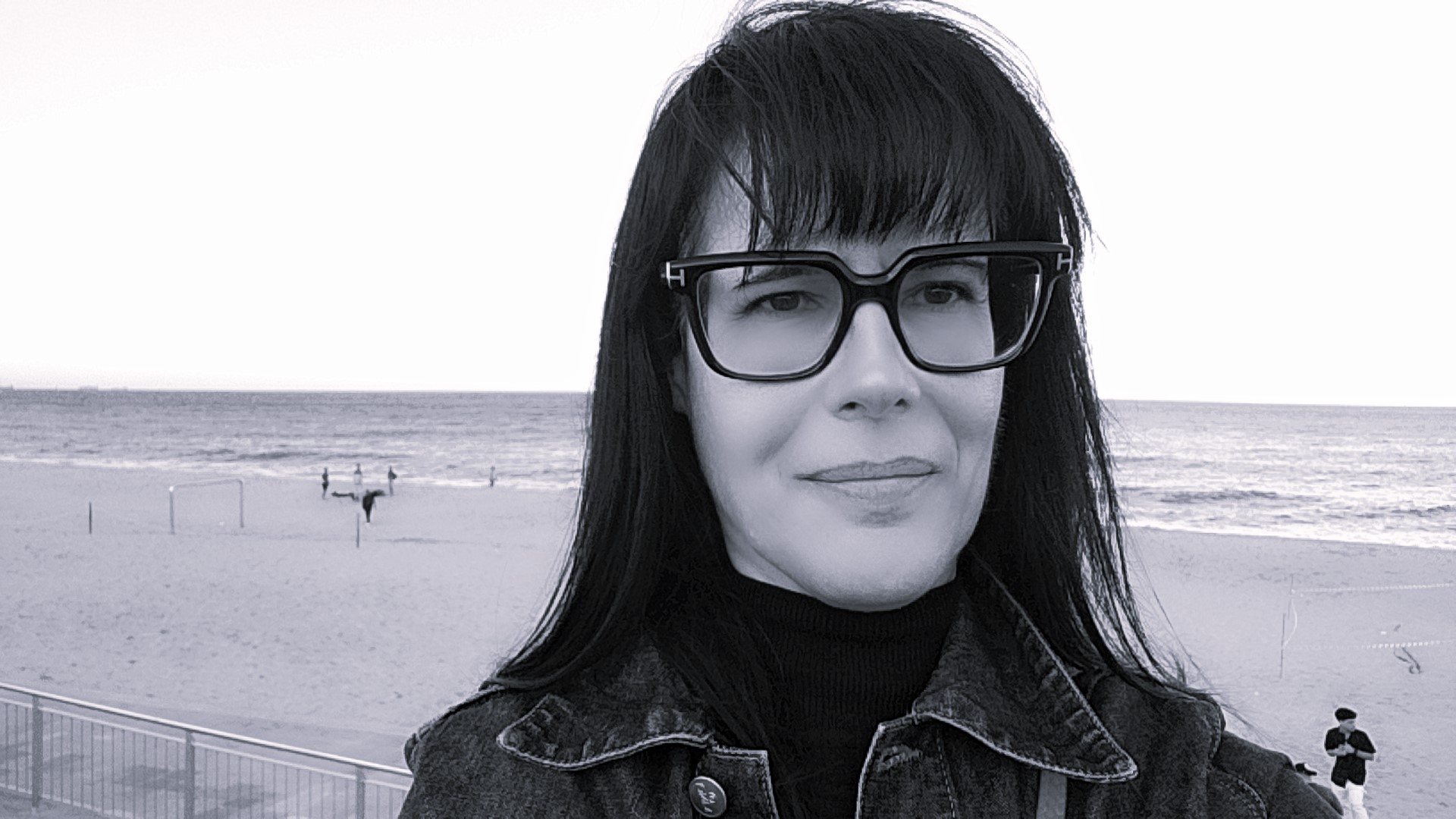
She is an architect and construction engineer in Barcelona, founder of Barcelona Open BIM, with a background in building design and BIM before she moved into deep learning. She has no software company and no team. What she has built is Memoria Digital, an open digital memorial where the women behind Spain's statistics are remembered by name.
The site says it in six words of Spanish, and they are the best summary of the project anyone could write: el dato contabiliza, la memoria recuerda. The data counts. Memory remembers.
The question she started from
The project did not begin as a technology idea. It began as a question, and she states it plainly.
"What happens when we stop looking at victims only as statistics and start remembering them individually?"
Anyone who has worked with public data knows the distance she is describing. Aggregation is what makes data useful, and aggregation is also what makes it bearable. A table of annual totals can be read at a conference without anyone in the room crying. That is not a flaw in the table. It is what the table is for.
But something is lost in the compression, and Muriel refuses to accept that the loss is unavoidable.
"The objective is not to replace official statistics or reinterpret them, but to complement them with another layer: memory."
She is careful about this distinction, and it matters. She is not criticising the statisticians. The official figures stay exactly where they are, doing the job they exist to do. What she added is the layer nobody was building, because it has no owner: statistics are a state function, and memory is not anybody's department.
"There is a fundamental difference between saying that a certain number of women were murdered and creating a space where those women can be remembered individually."
What the memorial actually is
Open the site and you find a wall of years, 2003 to 2026, and behind one of them, so far, the women.
The 2024 entries carry names, ages, dates and the towns where each woman died. Málaga, Girona, Barcelona, Alicante, Ciudad Real, A Coruña, Tarragona, Madrid. Small places, mostly. Each name opens a record built only from public information and verifiable sources.
Reading it is a different experience from reading the annual figure, and the difference is the whole point. A number tells you the scale. A list of names in small Spanish towns, with ages ranging from the twenties to the seventies, tells you what the scale is made of.
The other twenty-three years sit visibly empty, marked as prepared for future phases.
That is the detail that tells you what kind of person built this. An interface with twenty-three blank years looks unfinished, and the temptation to fill them with something, anything, would defeat most people. She refused.
"Where information has not yet been incorporated, it is not invented simply to complete the interface."
The empty years are a promise rather than a gap. They say the work is not done and nobody is pretending otherwise.
AI as the thing that made it possible at all
Here is where the story becomes relevant far beyond Spain, and beyond this subject.
Ten years ago this project simply would not have existed. Turning scattered public information into a structured, verified, individually navigable memorial is weeks of work for a developer, and a developer costs money, and there is no revenue in remembering the dead. So the project would have been an idea somebody had, mentioned to a friend, and never built.
Muriel is an architect. She built it anyway.
"I did not start from a large technology company or a dedicated software team. I started from a social question and used the technological capabilities now available through AI to build a working prototype."
AI did the work that scale requires: taking publicly available information and turning it into consistent structured records, at a volume that would be impractical to handle by hand. Without that, a memorial covering a country over two decades stays a spreadsheet somebody abandons.
"AI is increasingly allowing professionals from other disciplines to move from identifying a problem to actually building a technological solution."
That sentence deserves to be read twice by anyone running a charity, a foundation, a patient association or a small campaign group. The barrier that kept public-interest projects unbuilt was almost never the idea. It was that the idea needed an engineer, and engineers need paying, and social causes do not generate the money to pay them.
That barrier has quietly fallen. What used to require a team now requires a person who understands the problem well enough to describe it precisely. Muriel is what that looks like in practice: an architect who identified something missing in how a society remembers its dead, and then built it herself.
What she would not let the machine do
There is one line she drew, and it is the most human part of the project rather than the most technical.
AI helped her structure the information. It was never allowed to decide what entered the memorial.
Between the model and the memorial she placed a verification step that works by fixed rules rather than judgement: a record missing a required field does not go in, a record with a bad date does not go in, and above all, a record that has not been verified does not go in at all. Not provisionally, not marked as uncertain. It stays out.
"AI can help process information at scale, but it should not replace verification or responsibility."
Her reasoning is not about engineering correctness. It is about what a mistake would mean here.
A wrong field in most systems is a bug to be fixed next sprint. A wrong detail in this memorial is a false statement about a murdered woman, published under her name, where her family may read it. There is no version of that which is acceptable, and no efficiency gain worth risking it.
So she made the machine assist and kept the responsibility.
The lesson she took from building it
Asked what she learned, Muriel does not name a technical obstacle. She names a moral one.
"The technical challenge was not necessarily the most difficult part. The harder question was what technology should mean when the subject is human memory."
Working with statistics, she says, it is natural to concentrate on accuracy, structure and presentation. When those statistics represent people who lost their lives, how the information is represented becomes an ethical question as much as a technical one.
And then the sentence that should outlive this article, because it applies to almost everything being automated right now.
"Technological efficiency should not necessarily mean greater distance from the human reality behind the data."
Every system that processes people at scale, from benefits assessments to hospital triage to job applications, faces exactly that trade. Efficiency is usually purchased with distance. Muriel's project is a small, stubborn argument that it does not have to be.
What comes next, stated without decoration
There is no revenue, no funding, no investor and no user numbers, and she says so before anyone asks.
"It is not presented as a commercial startup, and I do not want to manufacture traction figures that do not exist."
What exists is a working public prototype, published openly, with its sources documented and its code available for anyone to inspect. She wants to continue developing it into a fuller and more sustainable memorial, and she is looking to work with people and organisations at the intersection of AI, open data, digital humanities and public-interest technology.
She is also interested in whether the same approach could serve other public-interest datasets, other forms of memory that currently exist only as totals in an annual report.
The phrase she uses for what she is trying to do is the clearest thing in her account of it: moving from data, statistics and numbers, towards structured information, verified records and individual memory.
"The technology is not the final objective. The objective is to use technology to make individual lives visible and remembered."
One woman in Barcelona, working alone, decided that a country's murdered women deserved to be more than a figure in a report, and then built the place where they are not. The memorial is at yolmuriel.github.io/memoria-digital.
---
This is a Partner Story: a written interview with a project building with AI, submitted through Submit Your Story and published free of charge. Statements about the project are the founder's own. Building something with AI? Tell us about it.
Would you try this product?