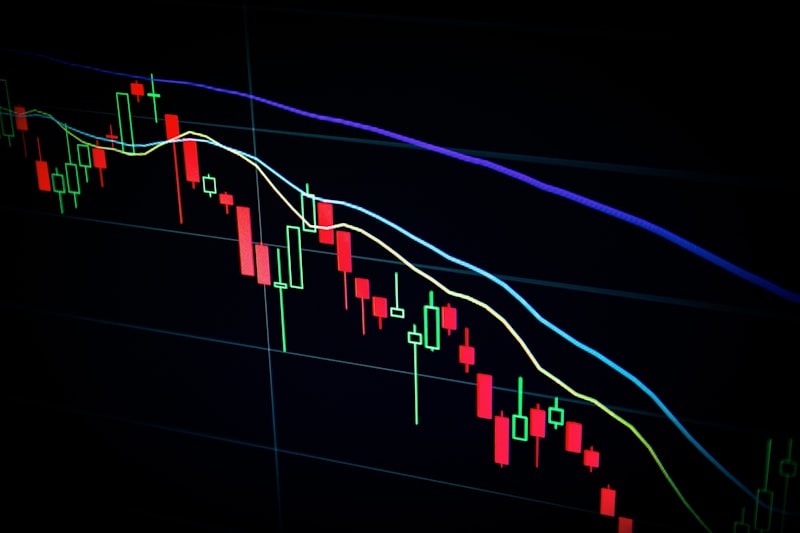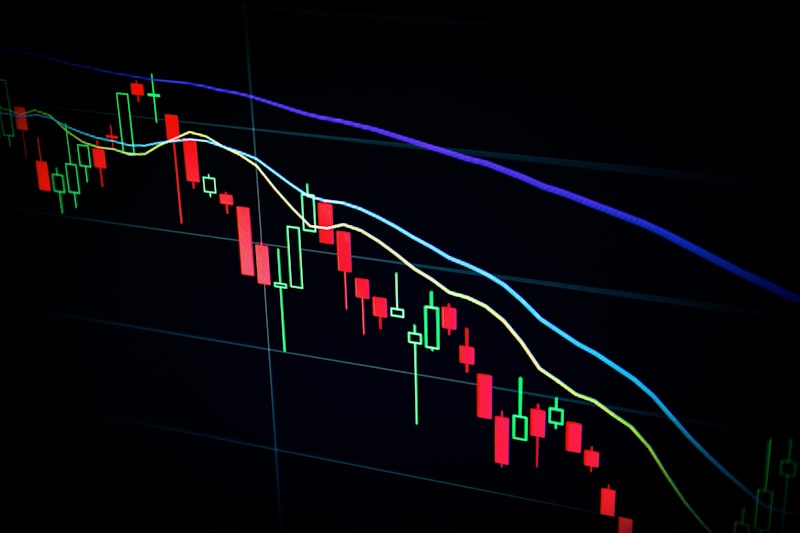
Every few weeks now, someone with a serious title says the quiet part out loud: this looks like 1999. A recent selloff, the Nasdaq dropping 2.2% in a session, the S&P shedding 1.4%, was triggered by nothing more than a fresh wave of "is AI a bubble?" anxiety rippling through the market. If you have a pension, a 401(k), an index fund, or a single tech stock, this is not an abstract debate. It's a question about your money, and the honest answer is more interesting, and more useful, than either the doomers or the cheerleaders will tell you.
So let me do something different from the usual hot take. I'm going to show you the numbers that genuinely should worry you, then the numbers that genuinely should reassure you, then the one metric that actually decides how this ends. This isn't financial advice and I'm not your advisor, it's a clear-eyed look at the data so you can think for yourself. Because the truth about bubbles is the part everyone forgets: the technology can be completely real and the stocks can still crash. Both were true in 2000. Let's figure out what's true in 2026.
The numbers that should scare you
Start with the bear case, because it's strong and you should sit with it honestly. Here are the figures making sober people nervous in 2026:
| Metric | 2026 reading | Why it's worrying |
|---|---|---|
| Top 10 stocks as share of S&P 500 | over 36% | Higher than the ~25% at the dot-com peak, extreme concentration |
| Shiller P/E (US market) | >40 | First time above 40 since the dot-com crash |
| S&P 500 forward P/E | ~23× | Well above the long-run average; priced for perfection |
| Nvidia market cap | ~$5.5 trillion | One company carrying a huge share of the whole market |
| Annual AI infrastructure spend | $400B+ | Enormous capex with, so far, limited enterprise payback |
Read that top row twice, because it's the one that should change how you think about your own portfolio. When the ten biggest companies are more than 36% of the entire S&P 500, and most of them are riding the same AI trade, your "diversified" index fund is quietly a concentrated bet on AI. That's more concentrated than the market was at the height of the dot-com mania. The Shiller P/E above 40 and a forward multiple of 23× say the market is priced as if everything goes right. That's the setup, historically, where disappointment gets punished hard.
Why it rhymes with 1999
It's not just the valuations, it's the behavior, and some of the tells are textbook late-cycle. The clearest is what's happening in how these deals get financed. Nvidia is rolling out arrangements that let AI cloud providers get GPUs through revenue-sharing and credit support instead of paying cash upfront, in other words, the chipmaker is helping finance its own customers' purchases. Vendor financing like that was a signature of the telecom bubble, when suppliers propped up demand by lending buyers the money to buy their gear. When the seller has to fund the buyer, ask who's really carrying the risk.
Then there are the exotic deals that only appear near tops. Reports this week had OpenAI's Sam Altman floating the idea of transferring roughly 5% of the company, valued around $42.6 billion, to a US government-linked vehicle, pitched directly to the President and his Treasury and Commerce secretaries. Whether or not that happens, the fact that such baroque, unprecedented structures are being discussed tells you how much money and strategic desperation is sloshing around. It's the same frothy dynamic behind the race to fund AI at any valuation, the sovereign wealth funds pouring in trillions, and now a European government buying equity in Mistral alongside Samsung and BlackRock. Mania has a look, and parts of this look familiar.
The numbers that say 'not yet'
Now the other side, because the bears miss something huge, and if you only read the scary numbers you'll make the opposite mistake and bail on a real thing too early. Here's what's genuinely different from 2000:
| Metric | 2000 (dot-com) | 2026 (AI) |
| Leader's forward P/E | Cisco at ~472× earnings | Nvidia at ~24-26× earnings |
| Profitability of leaders | Many had no profits | Magnificent Seven net margins >25% (S&P avg ~13%) |
| Revenue behind the story | Mostly promises | Hundreds of billions in real, growing sales |
| Cash generation | Cash-burning | Enormous free cash flow |
This table is the bull case in four rows, and it's serious. At the dot-com peak, the market's darling, Cisco, traded at an insane 472× earnings. Nvidia, today's equivalent poster child, trades around 24-26× expected earnings. That's not cheap, but it's a different universe from 2000. And unlike the profitless dot-coms, today's AI leaders are cash machines: the biggest names earn net margins above 25%, nearly double the S&P average. The revenue driving Nvidia's blockbuster quarters is real money from real customers, not a story about eyeballs. A market can be expensive without being a fraud, and that distinction is the whole ballgame.
The one number that actually decides this
Strip away the noise and the entire bubble question comes down to a single tension: the gap between what's being spent and what's being earned. The industry is pouring more than $400 billion a year into data centers, chips, and infrastructure, but enterprise monetization, the actual return businesses get from deploying AI, is lagging badly behind. That's a duration mismatch, and it's the real risk, not the valuations by themselves.
Here's the logic in plain terms. That $400 billion a year of spending is a bet that AI will eventually generate at least that much in profit, year after year, to justify itself. If those returns show up on schedule, the spending was rational and the stocks grow into their prices. If they don't, if AI keeps costing more than it earns for another couple of years, then the market reprices, hard, and all that infrastructure becomes a monument to overbuilding. This is exactly the paradox I dug into in the Gartner data on AI layoffs and missing ROI: the capability is real, but the measurable business return is arriving slower than the spending. Watch that gap. It's the thing that actually matters, and it's why the trillion-dollar infrastructure race is both the bull case and the bear case at once.
What history actually teaches
Here's the lesson people take backwards from the dot-com crash. They think "it was a bubble, so the internet was fake." Wrong, the internet was exactly as transformative as the hype claimed. It still didn't save the stocks. The Nasdaq fell roughly 78% from its 2000 peak. Amazon, Amazon!, dropped about 90% before going on to become one of the most valuable companies on Earth. The technology was real, world-changing, and correctly hyped, and investors who bought at the top still got wiped out for years.
That's the paradox to hold in your head: "AI is real and world-changing" and "AI stocks could crash 50%" can both be true at the same time. They were both true of the internet. Being right about the technology doesn't protect you from being wrong about the price you paid, or the timing. The railroads reshaped the world and bankrupted their investors. Real revolutions and brutal bear markets are old companions, and anyone telling you "it's a bubble" or "it's different this time" as if those are the only two options is selling you a simplification.
The signals that will actually tell you it's turning
Since nobody can time this, the smart move isn't to predict the top, it's to know which instruments on the dashboard to watch, so you're reading reality instead of headlines. Four signals matter more than the daily noise:
The ROI reports. The whole thing hinges on enterprises actually earning back their AI spending. Watch the hard data, Gartner, McKinsey, real corporate earnings calls, for whether AI is finally moving the profit line or still stuck in "promising pilot" limbo. A clear turn toward measurable returns is the single most bullish thing that can happen; another year of the no-ROI paradox is the most bearish.
The capex guidance. Right now the giants are racing to out-spend each other on data centers. The moment one of them cuts its capex forecast, signaling it no longer sees the demand to justify the build-out, is a genuine warning shot, because that $400 billion a year is the load-bearing wall under the whole trade.
The financing stress. Keep an eye on the plumbing. When chipmakers finance their own customers and deals get funded with debt and credit support rather than cash, cracks show up there first. Any sign of strain in AI-linked lending, a canceled data-center loan, a struggling neocloud, is the kind of early tremor that preceded past busts, the fragility I flagged in the chip-layer money war.
The IPO flood. Bubbles often top out when the insiders cash out. A sudden rush of AI companies racing to go public at any price, the pipeline I mapped in the 2026 AI IPO race, can signal that the smart money thinks valuations are as good as they'll get. Watch who's selling, not just who's buying.
None of these rings a bell at the exact top. But together they tell you far more than the fear-of-the-week, and watching them beats guessing.
What this means for your money
I can't tell you what to do with your specific portfolio, that depends on you, and it's a conversation for a licensed advisor. But here are the general principles this data points to, the same ones I keep coming back to on this site.
Know your real exposure. The single most important move is to understand that if you own a broad index fund, you already own a big, concentrated AI bet, because the top 10 stocks are over 36% of it. "I'm diversified in the S&P 500" is much less true than it was a decade ago. Whether that concentration is right for you is a personal question, but you should at least know it's there rather than discover it in a crash.
Beware over-concentration you didn't choose. If you work at an AI or tech company, get paid partly in its stock, and hold tech-heavy index funds, your job, your equity, and your investments may all be leveraged to the same trade. That's three bets on one horse. Spreading risk, the boring, unglamorous discipline behind investing in the theme without picking single winners, exists precisely for moments that look like this.
Separate the technology from the trade. You can believe completely in AI's future, I do, and still be careful about the price you pay to own it today. Those are different decisions. The lens I laid out in how AI companies actually get valued is about judging whether a given price is visionary or delusional, one company at a time, instead of betting the whole basket at any multiple.
The honest take
Nobody, not me, not the analyst calling 1999, not the CEO telling you it's different this time, knows when or whether this breaks. What I can tell you is that both stories are partly true, and the people who get hurt are usually the ones who commit totally to one. The concentration is genuinely extreme, the vendor financing is a genuine yellow flag, and the spending-versus-earning gap is a genuine risk. And the leaders are genuinely profitable, the revenue is genuinely real, and the technology is genuinely going to reshape the economy. Hold all of that at once, because reducing it to "bubble" or "not a bubble" is how you fool yourself.
The pattern that outlasts this particular moment is the one worth keeping: transformative technology and painful market crashes are not opposites, they routinely travel together. The internet was real and the Nasdaq fell 78%. AI is real, and that tells you nothing about whether today's prices are safe. The move that survives both outcomes isn't a bold call in either direction; it's knowing exactly how exposed you are, refusing to bet everything on one horse, and being able to sleep whether the boom runs five more years or corrects next quarter.
So here's the question worth sitting with, honestly: if AI stocks fell 40% next year, with the technology still advancing exactly as fast, would your finances be an inconvenience away from fine, or a disaster? Your answer to that, not your opinion on whether it's a bubble, is the thing actually worth acting on.
This article is general information, not financial advice. Do your own research and consider a licensed professional before making investment decisions.
Sources: Fortune: AI bubble fears; The Motley Fool: Should you worry about an AI bubble in 2026.