Picture a factory the size of eleven football fields. It's running full tilt, machines moving, parts flowing, smartphones rolling off the line at a rate of one every few seconds, around the clock, 365 days a year. Now picture the lights are off. Not dimmed. Off. Because there's no one inside to see by. The robots don't need light, and they're the only ones working.
That's not a concept render or a scene from a sci-fi film. It's Xiaomi's smart factory near Beijing, and it's real today. They call places like this "dark factories", fully automated plants where, as one description puts it, there's no human presence on the production floor and robots handle assembly, inspection, and logistics around the clock. I want to walk you through what's actually happening here, because behind the eerie image is a story about money, who makes it, who loses it, and if you're paying attention, where you might stand.
This is the part of the robot story that's less about a single machine you can buy and more about a shift in how the world makes things. And it's coming for far more than smartphones.
The factory that runs in the dark
Let's start with the concrete numbers, because they're genuinely staggering. Xiaomi's facility spans 81,000 square meters and operates 24 hours a day, 7 days a week, with no human workers on the production floor. It can produce up to 10 million smartphones a year, and it turns out a finished phone roughly every three seconds, some reports say close to one per second, with the line making real-time decisions on its own.
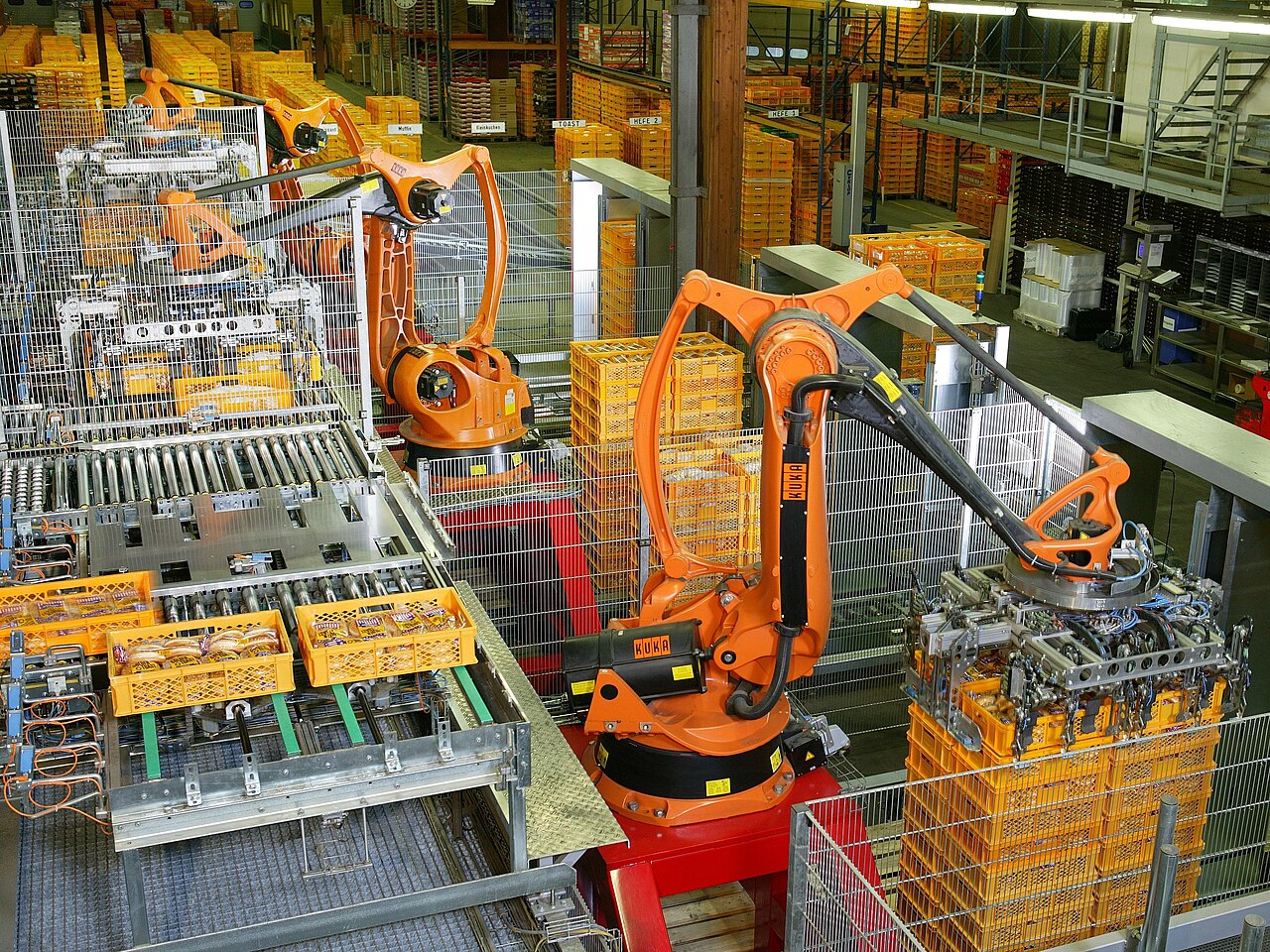
The brain behind it is Xiaomi's "HyperIMP" smart-manufacturing platform, an AI-driven system that lets the machines think, adapt, and optimize independently, without an engineer babysitting every step. Industrial robots do the assembly. LiDAR, infrared cameras, and IoT sensors form the nervous system. AI makes the calls. And because none of those things have eyes that need lighting, the whole plant can run dark, which, as a bonus, slashes the energy bill on top of the labor bill.
Stack up what a dark factory removes from a manufacturer's cost sheet and you start to feel the gravity of it: no wages, no benefits, no breaks, no shift changes, no holidays, no night-shift premium, no lighting, no climate control for human comfort, no recruiting, no turnover. The machines just keep running. Xiaomi isn't alone, it operates another dark facility in Wuhan, and this is rapidly becoming a template rather than a stunt.
This is the same robot wave, just wearing work clothes
You might be thinking this sounds different from the humanoid robots and robot dogs we've been covering. It's not. It's the same wave, physical AI, showing up in its most industrial, least glamorous, and arguably most profitable form.
A dark factory is what you get when the AI that learned to see, decide, and act gets wired into an entire building instead of a single machine. The breakthrough isn't the robot arms; factories have had robot arms since the 1980s. The breakthrough is the AI coordinating them, handling the unpredictable, adapting in real time, running quality inspection, and keeping the whole orchestra in sync with no conductor on the floor. That coordination layer is the same intelligence reshaping every other corner of the economy. The dark factory is simply where it quietly went to work first, at the largest scale.
And it explains why China is so far ahead. China already makes the robots, the motors, the sensors, and the magnets cheaper than anyone, so wiring them into lights-out plants is the natural next step for the country that already builds most of the world's stuff. The cheap-robot supply chain and the dark factory are two faces of the same advantage.
The number that should make you sit up
Here's where the warm, human part of this gets serious, and I won't dodge it. As these factories spread, China's manufacturing workforce fell from 115 million workers in 2013 to below 85 million in 2025, a loss of more than 30 million factory jobs. And here's the gut-punch detail: that happened even as Chinese exports hit record highs in early 2026. More output. Far fewer people. That's the whole story of automation in a single sentence.
This is not a distant, China-only phenomenon either. Gartner estimates that by 2026, 60% of manufacturers worldwide will adopt some form of this model. The dark factory isn't a Chinese curiosity you can watch from a safe distance. It's a preview of how manufacturing works, period, and it's arriving in your country next, on your supply chains, affecting the price of what you buy and the jobs in your region.
I think it's important to sit with both sides of this honestly. On one hand, it's genuinely unsettling, 30 million livelihoods is not a statistic, it's families and towns. On the other hand, pretending the trend isn't happening protects no one; it just guarantees you're unprepared when it reaches you. The people who thrive through shifts like this are the ones who see them clearly and early, and decide where to stand. So let's talk about where the money goes, and where you might.
Follow the money: who gets rich on the dark factory
When a factory removes labor as a cost and runs nonstop, that money doesn't vanish. It moves. And you can follow it.
The manufacturers themselves. A company like Xiaomi that builds phones with near-zero floor labor and round-the-clock output enjoys lower unit costs, higher margins, and the ability to undercut competitors who still pay human assembly lines. That cost advantage is exactly why Chinese electronics keep getting cheaper while staying profitable. Owning the manufacturers riding this curve is one bet.
The automation suppliers. Somebody builds and sells the robots, the LiDAR, the sensors, the AI platforms, and the integration that make a dark factory possible. As 60% of the world's manufacturers race to automate, these suppliers sell into a stampede. This is the classic picks-and-shovels layer again, you don't have to guess which factory wins, only that a lot more factories go dark, all needing the same gear.
The component makers underneath. Every robot arm in every dark factory runs on the same motors, gears, and rare-earth magnets we keep coming back to. The deeper you go down the supply chain, the more brand-agnostic and durable the demand gets. A robot arm doesn't care whose logo is on the building it works in.
You, the consumer, and the operator. There's an upside that's easy to miss in the gloom: dark factories make goods cheaper. That's deflationary pressure on the price of electronics, appliances, and eventually much more, real money back in your pocket as a buyer. And for the entrepreneurial, the same automation logic scales down. The small-scale version of "remove labor, run longer, cut cost" is exactly the integrator and robot-operator businesses we cover, bringing a slice of dark-factory efficiency to local businesses that can't build an 81,000-square-meter plant but would love a robot that works the night shift.
Where this leaves you
Let me be straight with you about what I think this means, because I'd rather give you a real opinion than a tidy non-answer. The dark factory is one of the clearest signals we have that "physical AI" isn't a someday story, it's a now story, already running at the scale of ten million phones a year with the lights off. The direction is set. The only variables are speed and who adapts.
If your instinct is fear, I understand it, and the 30-million-jobs number earns that fear. But fear that turns into attention is useful. The honest, slightly uncomfortable truth is that the same force that erases an assembly-line job creates new value somewhere adjacent, in the companies that build the automation, the components underneath it, the cheaper goods it produces, and the services that bring its logic to businesses too small to build their own dark factory. The people who do well over the next decade won't be the ones who pretended this wasn't coming. They'll be the ones who looked at the factory running in the dark, understood exactly where the money moved, and quietly moved with it.
You can't stop the lights from going off. You can decide which side of the wall you're standing on when they do.
---
Keep Reading
- How to Invest in the Humanoid Robot Boom Without Buying a Robot, the automation and component plays behind the dark factory
- The Robot That Replaces a $45K Warehouse Worker for $12K, the same labor math, at a scale you can act on
- Companies Cut 113,000 Jobs for AI: and the ROI Never Showed Up, the human cost of automation, in hard data
- The Wired Belt: What AI Does to Cities China Did to Factory Towns, where dark factories leave whole regions
- China's $150B AI Strategy: How Beijing Plans to Dominate, why China leads the lights-out shift