In the early 2000s, China entered the World Trade Organization and a wave of cheap manufacturing wiped out 2.4 million American factory jobs in a decade. The towns that depended on those jobs never recovered. They became the Rust Belt, a geography of abandoned mills, shrinking tax bases, and political fury that eventually reshaped a presidential election.
Now a professor at Tufts University is arguing, with uncomfortable specificity, that the same thing is about to happen to cities.
Not factories this time. Office towers. Not blue-collar workers. White-collar ones. Not the Rust Belt. Something he calls the Wired Belt, the knowledge-economy metros where AI is quietly eating the jobs that paid for the yoga studios and the oat milk lattes and the $3,200 studio apartments.
The Numbers That Should Concern You
Bhaskar Chakravorti, Dean of Global Business at Tufts, didn't publish a blog post or a tweet thread. He published a research paper. And the numbers in it are specific enough to be either very wrong or very important.
9.3 million American jobs are directly vulnerable to AI automation. Not at some vague future date. In the current wave.
The projected income loss in the baseline scenario: $200 billion. In the extreme scenario, which Chakravorti is careful to call unlikely but not impossible, $1.5 trillion.
But here's the part that makes this different from the usual "AI will take your job" headline. He mapped it geographically. And the map doesn't look like what you'd expect.
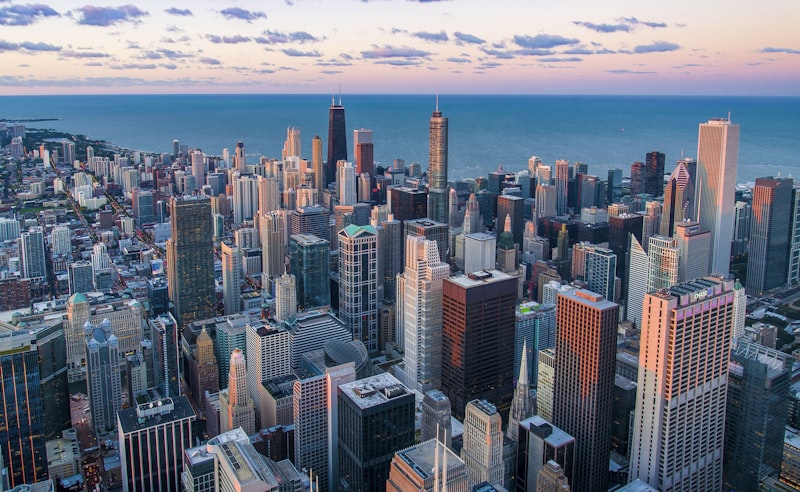
14 major knowledge-driven metro areas face 3.6 times higher job loss and 5 times higher income loss than the manufacturing regions that got hit by Chinese offshoring. San Francisco, New York, Boston, Austin, Seattle, D.C. the cities that thought they were immune because they traded in ideas, not widgets.
Sit with that ratio for a moment. 3.6x the job loss. 5x the income loss. Compared to the economic event that redrew American politics for a generation.
Why Cities This Time
The China shock hit places that made physical things. The AI shock hits places that process information. And it turns out, processing information is what most high-paying urban jobs actually are.
Think about what happens inside a typical office in downtown Manhattan or the Financial District in San Francisco. People read documents, write summaries, analyze spreadsheets, draft emails, prepare presentations, coordinate schedules, review contracts, synthesize research. Every single one of those tasks is now within the capability envelope of a $20/month AI subscription.
Not perfectly. Not every time. But well enough and fast enough that the math changes for employers. When one person with Claude or GPT-5.5 can produce the output that previously required three, somebody gets the email.
The 2026 numbers are already validating the thesis. 49,135 AI-related layoffs have been reported so far this year, and it's only May. For context, the total for all of 2025 was 55,000. We're on pace to nearly double it.
The Political Dimension Nobody's Modeling
Here's where Chakravorti's argument gets genuinely provocative.
When factory workers lost their jobs to Chinese competition, they were geographically concentrated, economically devastated, and politically mobilized. They voted. They changed the political landscape. The 2016 election is, in part, a direct consequence of the China shock.
The professor's argument: displaced knowledge workers will do the same thing, but from the opposite direction.
These aren't people who quietly accept their fate. These are, as he puts it, "people who are on LinkedIn", with strong writing skills, organizational ability, media savvy, and existing professional networks. When a marketing director at a Fortune 500 company gets replaced by an AI workflow, they don't go quietly into unemployment statistics. They write op-eds. They organize. They run for office.
The political implications are staggering and genuinely unpredictable. The Rust Belt backlash came from the right. Where does the Wired Belt backlash come from? Nobody knows, because the coalition doesn't exist yet. But the economic conditions that created the Rust Belt coalition are forming, right now, in the cities.
The Counterargument (And Why It's Partially Right)
This is where intellectual honesty matters, because the counterargument isn't stupid.
Some economists point out that cheap Chinese imports, despite destroying manufacturing jobs, also lowered consumer prices and freed up capital that funded new businesses in other sectors. The same logic applies to AI: if knowledge work gets cheaper, businesses can do more with less, prices fall, new companies form around previously uneconomical ideas, and new jobs emerge.
This is historically accurate. It's also historically slow. The new jobs that replaced manufacturing jobs took 15-20 years to materialize and required geographic relocation, credential changes, and often a generational shift. The people who lost their factory jobs didn't get the new tech jobs. Their kids did. Maybe.
The question is whether AI displacement will follow the same pattern, temporary pain, eventual rebalancing, or whether something structurally different is happening this time.
Chakravorti's position, and mine, is that something different is happening. Not because AI is uniquely destructive, but because it's uniquely fast. The China shock played out over a decade. AI capabilities are doubling every 12-18 months. The rebalancing mechanism that relies on humans retraining over 5-10 years doesn't work when the technology advances faster than the retraining cycle.
What Actually Happens to the $3,200 Studio Apartment
Follow the logic chain one step further, because this is where the housing market, the tax base, and the political structure all intersect.
If 9.3 million knowledge workers see significant income disruption, some meaningful fraction of them stop paying $3,200 for a studio apartment in San Francisco. They move somewhere cheaper. Remote work, which was already enabled by COVID, becomes not a lifestyle choice but an economic necessity.
Urban tax revenues decline. Commercial real estate vacancies, already elevated since 2020, accelerate. The service economy that depends on office workers, the coffee shops, the lunch spots, the dry cleaners, contracts further.
This isn't speculative. It's already happening in slow motion in several tier-two tech cities. Austin's commercial vacancy rate hit 22% this quarter. San Francisco's has been above 30% for two years. The question is whether AI displacement turns a gradual adjustment into an acute one.
Where the Money Moves
Because this is AI Business and not a policy journal, the relevant question is: who profits from structural displacement?
Three groups, historically.
Those who build the displacing technology. OpenAI, Anthropic, Google, and the infrastructure providers (NVIDIA, data center REITs) capture the direct value. This is the obvious play, and it's priced in.
Those who help people adapt. Reskilling platforms, AI coaching services, career transition consultancies. When 9.3 million people need new skills, the market for those skills is enormous. We've seen this pattern before: coding bootcamps emerged from the 2008 recession, not from the boom that preceded it.
Those who arbitrage the displacement. The person who uses AI to do the work of three is, by definition, capturing the economic value of the other two. Right now, most of that value flows to employers. But freelancers, solopreneurs, and small agencies who position themselves at the intersection, AI-augmented, human-guided, can capture it directly. A marketing consultant who uses AI to deliver the output of a small agency, at agency prices, is the knowledge-economy equivalent of the factory that survived by automating first.
The Uncomfortable Question
Chakravorti ends his paper with a policy discussion. I'll end with a different question.
If you're reading this, you're probably a knowledge worker. You probably live in or near one of those 14 metro areas. You probably do work that involves reading, writing, analyzing, synthesizing, or coordinating, the exact skill set that AI is getting good at, fast.
The China shock taught us one thing with absolute clarity: the people who recognized the shift early had options. The people who didn't recognize it until the factory closed did not.
The factory is still open. For now.
---
Keep Reading
- The AI Job Apocalypse Nobody Wants to Talk About, the broader displacement numbers across all sectors
- Highest Paying AI Jobs 2026: $72K to $900K, if you're adapting, these are the roles that pay
- How to Make Money with Claude AI, the arbitrage opportunity for individuals
- Why AI Will Collapse the Real Estate Industry, the housing implications of workforce displacement