Partner Story · in conversation with Alex Mastryukov, founder of Menaela. This is a written interview submitted through Submit Your Story. The claims below are his own, presented as they were given to us. No payment was involved.
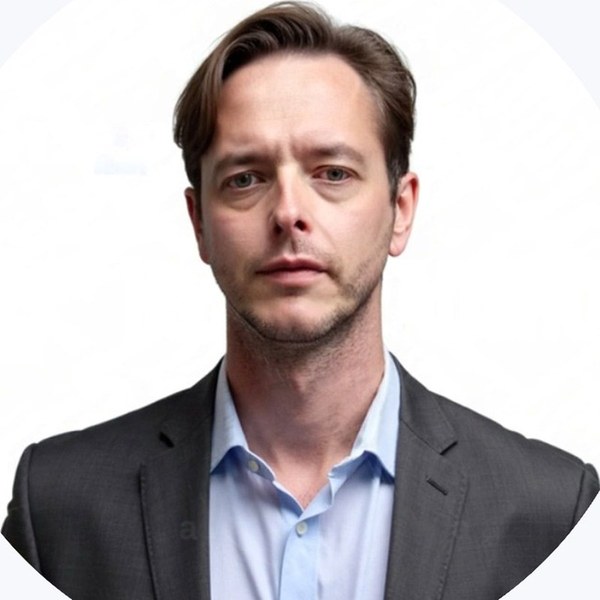
Alex Mastryukov, founder of Menaela. Photo: courtesy of Alex Mastryukov.
A doctor wants to treat patients. That sounds obvious, but Alex Mastryukov thinks most software for clinics quietly forgets it.
"They generally do not want to learn about hosting, databases or maintaining software," he says. "Even if someone can now build an app over a weekend, that does not mean a doctor wants to become responsible for keeping it working."
He knows this from the owner's side of the desk. Before he wrote any code for doctors, he was running clinics.
From a clinic chain to software
Mastryukov found the financing and a core team, opened his own medical center, and watched it grow into a small chain. That was when he discovered how hard it was to run even a small center without a decent IT system.
So he built one himself. Then people he knew in healthcare started asking whether they could buy it.
That first system became an earlier healthcare software business. Menaela, based in Israel, is a new product built on the same experience, with one big change: AI is not a feature added on top. It is the main way you use it.
He does the technical work himself, with help from OpenAI's Codex.
Talk to her like a secretary
The idea is simple to describe. A small practice still needs appointments booked, patient questions answered and information kept in order. Mastryukov wants the doctor to talk to Menaela the way they would talk to a real secretary, and have her handle the work.
"The product needs to take work off the practice, rather than create another system to manage."
In practice, that means a few things. Patients write in on WhatsApp, and Menaela answers routine questions and books, moves or confirms appointments against the clinic's real calendar. Staff can follow every conversation and step in or take over at any point. Questions that need a medical judgement stay with the clinic's people.
Inside the clinic, the doctor or the front desk can ask for things in plain words, by chat or by voice: find a free slot with a particular doctor for a particular service, pull up a patient, check the week. The ordinary calendar and patient screens are still there for when a visual overview is easier.
And there is an AI Scribe. A consultation can be recorded and transcribed, and Menaela prepares a draft note attached to the appointment. The clinician reads the transcript and the draft, corrects them, and decides what goes into the final record.
Why it has its own clinic system underneath
The detail that matters most is the part you cannot see. Menaela is not a chatbot bolted onto someone else's software. It has its own practice-management system built in, so the conversation and the calendar work from the same information.
That is why a request can actually finish. A simple ask like "find this patient a slot with the doctor on Thursday afternoon" is not just a sentence to be understood. It is a search against a specific provider, a specific service, its duration and the clinic's working hours, followed by a booking.
"Understanding a request is only one part of carrying it out correctly," Mastryukov says. Permissions, the clinic's configuration and the scheduling rules still decide what the AI is allowed to do.
The same thinking runs through a smaller design choice. A clinic manager can save explicit instructions for Menaela, for example how replies to patients should sound. But facts, like a service price, a doctor or working hours, live only in the clinic's structured settings. A casual conversation does not quietly turn into a permanent rule. And asking Menaela to reformat a medical note cannot add clinical facts that were not in the consultation.
Which AI does the work
Mastryukov uses OpenAI models in production, and he is precise about it. His diagnostic reports from 24 October show the staff assistant running on gpt-6-luna with medium reasoning. His voice setup from the same date uses GPT-4o mini for speech and GPT Transcribe for turning speech into text.
He presents those as dated details of individual parts, not a claim that one model runs everything.
The money question
The price on the site is $399 a month for the core plan, aimed at solo practitioners and small clinics. It covers the clinic system, patient messaging, the AI practice manager and the documentation workflow together. Migration from another system, custom integrations or several locations can change the scope.
The comparison Menaela is making is not with another app. It is with a secretary plus a stack of separate software bills: a calendar here, a messaging tool there, notes somewhere else. The site is careful not to promise a magic return on investment. The economics, it says, depend on the clinic.
Ten doctors, no revenue yet, on purpose
Here Mastryukov is unusually direct.
In his update of 18 October, Menaela had ten pilot users, all doctors with their own practices, all using it free of charge. There was no revenue at that point. He is careful to call these pilot figures, not ten paying clinics, and not a claim about how many use it today.
He is holding back from a big launch for a reason.
"I want real evidence that the product works before pushing broadly into the market. In healthcare, mistakes are easy to make and can quickly undermine trust."
The lesson: a nice conversation is not a booking
The most useful story Mastryukov tells is about a failure that looked like a success.
Conversations with patients were going reasonably well. Menaela was polite, understood what people wanted, and kept the exchange moving. Then it came time to actually book, and things got difficult. The flow behind the booking had become too complicated.
His fix was to make it simpler. Give the assistant the available slots and keep them in front of it. Talk through the patient's preferences. Confirm the date and time. Check availability again just before booking. And if the time is gone, offer the closest alternatives instead of hitting a dead end.
"The goal is to book an appointment," he says. "A conversation that sounds good but stops before completing the task is not enough."
He is honest that this is a design decision, not a finished success story with numbers behind it. But it is a lesson that applies far beyond clinics. Anyone putting an AI assistant in front of customers can check the same thing: not whether it sounds good, but whether the task is done at the end.
What comes next
The immediate priority is making everyday workflows dependable with the pilot practices. The first focus is practices where patients pay directly. Answering patients' phone calls is a later stage, and US insurance and billing workflows come after that.
Mastryukov does not expect the idea to stay unique. Existing practice-management companies can move in the same direction. His focus is making the combination genuinely useful for a small practice, and earning its trust.
He is looking for solo practitioners and small clinics willing to try Menaela on their real administrative work and tell him directly what works and what doesn't.
Menaela is in English, Hebrew and Russian, including a right-to-left Hebrew interface, and is at menaela.com.
---
This is a Partner Story: a written interview with a founder building with AI, submitted through Submit Your Story and published free of charge. Statements about the company's product, users and plans are its own. Menaela does not provide medical advice. Building something with AI? Tell us about it.
Would you try this product?