
Partner Story · a guest column by Tetiana Stepanets, founder of Lilidi, written for AI Business after she accepted our invitation through Submit Your Story. The figures below are the company's own. No payment was involved.
By Tetiana Stepanets, founder of Lilidi
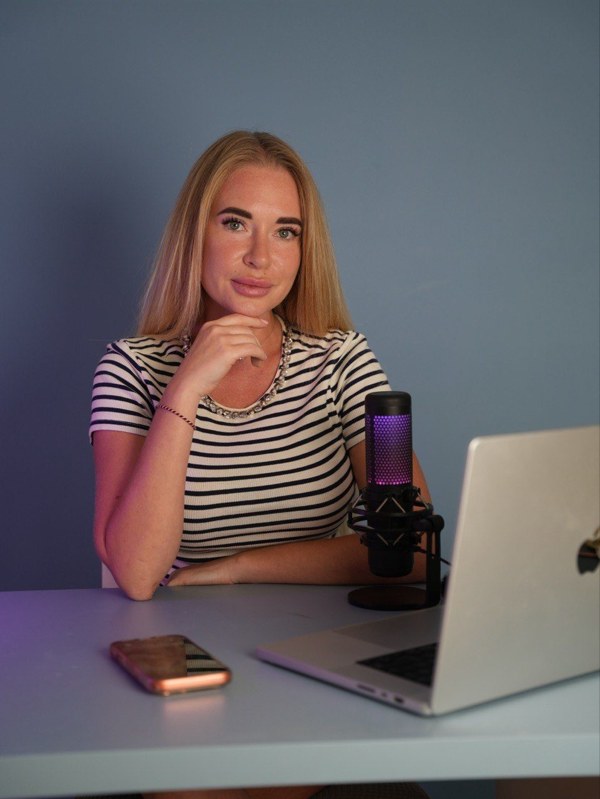
Tetiana Stepanets, founder of Lilidi. Photo: Lilidi press kit.
An AI representative sounds convincing in a demo. That is not evidence that it works for your customers.
We build Lilidi Twin, an AI employee that talks to website visitors by video, voice or text. The most useful thing we did was to measure it honestly, including where it fails. Here are five things to check before you give an AI a place in front of your customers.
Check 1: Does the conversation actually start?
Count how many visitors press the call button and how many reach a connected conversation.
On our own homepage over 28 days, 99 call attempts from 50 visitors led to 55 connected calls from 34 visitors. The rest ended in errors or with visitors leaving while the call connected. That gap, not the avatar's face, was our biggest problem.
Our numbers include our own tests, so treat them as a floor for honesty, not as a benchmark.
Check 2: Does it work on every device?
Our errors were not spread evenly. They were far more frequent on Apple devices than on Windows and Android. We suspect it has to do with how browsers handle microphone and camera permission, though we have not yet confirmed the cause.
A tool that works on your laptop can fail for a visitor on a phone. Test on the devices your customers use.
Check 3: What happens when it fails?
Every failure should leave the visitor a way forward: try again, open the page in a new tab, or book a call with a person.
We are adding a record of the reason for each failure on our own server, per website, so we can fix causes instead of guessing.
Check 4: Does it answer only from what the business approved?
Ask it questions outside its knowledge on purpose. A good representative says it does not know and offers a person.
Then check the handoff. The person who takes over should see the context, so the customer does not have to start again.
Check 5: Does it say it is an AI, always?
A visitor should know at the start of a conversation that they are talking to an AI. We state it in the first sentence, and our terms forbid configuring a Twin to claim to be a person.
What we do not claim
We are early. We have about 110 accounts and 11 customers running a Twin on their own site, and no paying subscriptions yet.
I do not quote conversion or revenue results we have not measured, and I would be cautious of anyone who does at this stage.
A practical test you can run this week
Call your own AI representative from three devices. Ask one question it should answer, one it should refuse, and one that needs a person. Write down what happened.
If you cannot see in your own data how many attempts connected and why the others failed, you are not yet measuring the thing that matters.
About Lilidi Twin
Lilidi Twin talks with a company's customers by voice, video and text, on its website or through a shared link. It answers questions, qualifies leads, books meetings in Google Calendar or Calendly, and drafts follow-up emails that the business approves before they are sent. It can also join Zoom, Google Meet and Microsoft Teams calls.
The Twin answers only from the website, documents and rules the business approves. It tells visitors they are talking to an AI, and it hands complaints, refunds and sensitive questions to a person.
Every plan is the same product; the difference is the number of live minutes. The Free plan includes 60 minutes of video or voice every month, with no card required, and the first 14 days run on Professional. Paid plans are $59 a month for 175 minutes, $179 a month for 500 minutes and $499 a month for 1,500 minutes, with 20% off on annual billing. Anyone can talk to a live Twin for free on the Lilidi site.
About the author
Tetiana Stepanets is the founder of Lilidi, based in Nice, France. She moved from Ukraine in 2020 and ran Crema Caffe, a chain of more than 30 coffee shops, remotely. She then ran an Amazon business for about three years and sold it to an investor, and worked in PR before starting Lilidi.
In 2026 she took Lilidi to eight exhibitions, including RAISE Summit in Paris, Tech BBQ in Copenhagen, AI Summit Barcelona and Web Summit Lisbon. More at lilidi.ai.
The author notes that this column was drafted with AI assistance and reviewed and edited by her. The text is original and has not been offered to other publications.
---
This is a Partner Story: a column by a founder building with AI, published free of charge through Submit Your Story. Statements about the company's product, customers and results are its own. Building something with AI? Tell us about it.
Would you try this product?