
Partner Story · in conversation with BioLayers AI. This is a written interview submitted through Submit Your Story. The claims below are the founder's own, presented as they were given to us. No payment was involved.
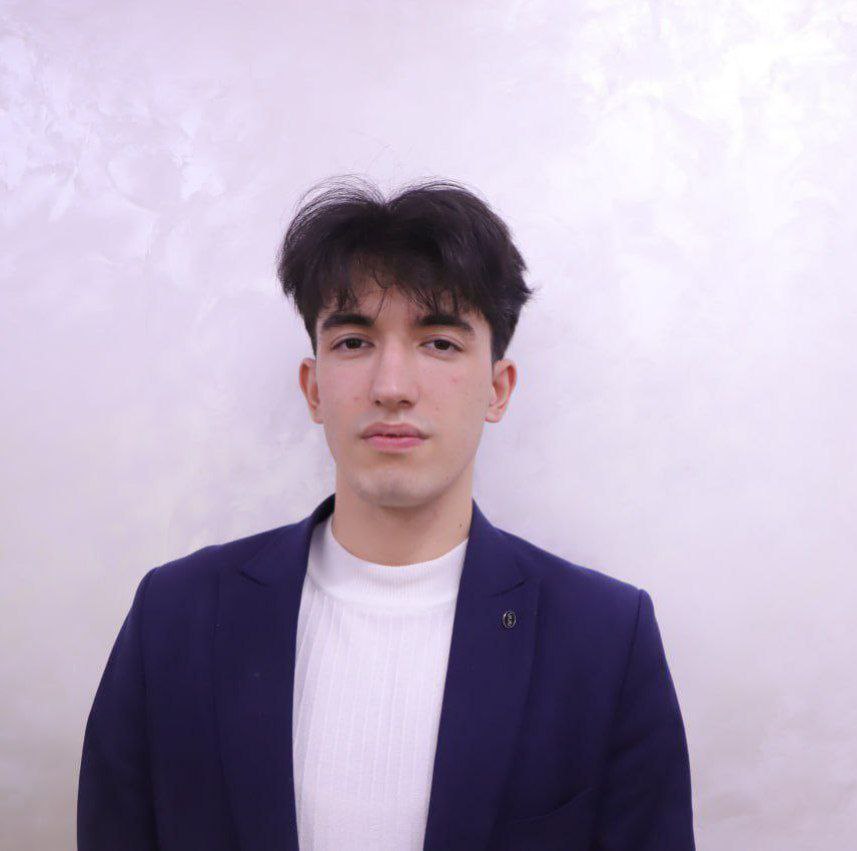
Azizbek Gayratov, founder of BioLayers AI. Photo: courtesy of the founder.
Azizbek Gayratov finished high school in Tashkent, Uzbekistan, two months ago. He graduated from the Abu Ali ibn Sina Specialized School with a 3.95 GPA and a 1500 on the SAT, including a near-perfect 790 in maths.
For the past year, alongside school, he has been doing something most people twice his age would not attempt: an independent research project on cancer-associated fibroblasts and their role in prostate cancer bone metastasis, conducted under the guidance of a clinical oncologist. He read and analysed more than a hundred peer-reviewed papers and synthesised them into a research manuscript.
Somewhere in the middle of those hundred papers, he hit the problem that became a product.
The problem: mechanisms do not live in single papers
"Reading individual papers was manageable," he says. "Reconstructing a mechanism across twenty or thirty studies became difficult."
Anyone who has done a serious literature review will recognise the wall he hit. Cancer mechanisms are rarely explained by any single publication. The evidence is scattered across studies that used different cell lines, different experimental models, different doses, different tissues. Paper A shows one link in the chain, paper F shows the next, and papers C and D contradict each other for reasons buried in their methods sections.
He started drawing biological maps by hand, so he could see the relationships across the literature without losing track of which experiment supported which claim.
BioLayers AI grew out of that workflow.
What the platform does
BioLayers takes findings from cancer papers and organises them into connected biological maps. Genes, proteins, cells, pathways and biological processes become linked entities. A user uploads a paper, an abstract or pasted text; the platform extracts the entities, reconstructs the directional relationships between them (activates, inhibits, secretes, regulates), and organises the result across biological scales, from molecule to cell to pathway to phenotype.
The part Gayratov cares about most is what stays attached to each connection.
"If the platform displays A affecting B, the goal is to let the researcher inspect the publication, reported result, experimental model, and evidence supporting the connection."
AI does the extraction and organisation. What it is deliberately not asked to do is smooth things over.
"I do not want the model to replace the underlying research with a confident explanation. Cancer biology depends heavily on experimental context, and conflicting findings can both be useful when their conditions remain visible."
Reconstruction, not summarisation
That last point is the whole argument for the product, and it is worth slowing down on, because it cuts against how most AI tools treat scientific literature.
The market is full of paper summarisers. They help someone understand an individual publication, and Gayratov's difficulty was never with individual publications. It appeared after reading many of them, when the task became reconstructing relationships across the literature.
"Two studies can report different effects because they used distinct models or experimental conditions. Combining both into a smooth paragraph can erase useful information. BioLayers is designed to preserve the evidence structure instead."
A summary that averages a contradiction away reads better and is worth less. A map that keeps both findings visible, each with its cell line and its conditions attached, is what a researcher actually needs on the day the contradiction matters. It is an unfashionable design choice for the same reason it is a good one: it refuses to make the literature look tidier than it is.
Where it stands
BioLayers has a working online prototype, and the walkthrough, the interactive demo and the workspace are open to look at today. Gayratov tests it against problems from his own prostate cancer research: conflicting findings, context-dependent relationships, mechanisms supported across multiple publications. He runs the research direction and product development with a small technical team.
The next stage is deliberately modest: a small student research pilot in Uzbekistan, in which participants will work with real cancer literature and build biological maps inside the platform.
"Their questions, mistakes, and completed maps will help identify limitations invisible during development. I know how I personally organize cancer literature. A new user may prioritize other evidence, interpret a relationship differently, or attempt to represent information the current platform cannot handle. Seeing those interactions is more useful to me now than adding features without user evidence."
The money, stated honestly
There is no revenue and no pricing yet, and Gayratov does not pretend otherwise.
His current thinking runs in the standard direction for research tooling, which is also the correct one: keep a useful core version accessible to individual researchers and students at a low barrier, and earn from the organisations with budgets, meaning research laboratories, universities, and biotech and pharmaceutical teams that need larger-scale literature reconstruction, collaborative workspaces or integration into existing research workflows. He is also exploring grants and research partnerships to support development during validation.
"The immediate priority is not monetization; it is determining whether BioLayers solves the evidence-reconstruction problem well enough that researchers actually want to incorporate it into their work. I believe the commercial model should follow that evidence rather than precede it."
For context on where the ceiling sits: reference-management and literature tools built into research workflows, from Mendeley to the newer AI-native platforms, monetise exactly this way, free for the individual, licensed to the institution.
What he is looking for
Researchers, laboratories, universities and technical partners willing to test BioLayers on real scientific questions. That is the entire ask: not funding, not customers, but difficult problems and honest users.
The longer-term ambition is bigger, and he states it carefully: infrastructure for reasoning across biological evidence, where findings scattered across publications can be inspected, connected, challenged and built upon without separating claims from their evidence. Cancer research is the starting point because it is the field he works in and it supplies hard test cases.
"I am interested in finding out how far that approach can go."
He is eighteen, he has a manuscript, a prototype and a pilot plan, and he has already understood something many funded teams have not: in science, an answer without its evidence is not an answer. The prototype is at biolayers-ai.vercel.app.
---
This is a Partner Story: a written interview with a company building with AI, submitted through Submit Your Story and published free of charge. Statements about the company's product, customers and results are its own. Building something with AI? Tell us about it.
Would you try this product?