Partner Story · in conversation with AI Scanner. This is a written interview submitted through Submit Your Story. The claims below are the founder's own, presented as they were given to us. No payment was involved.
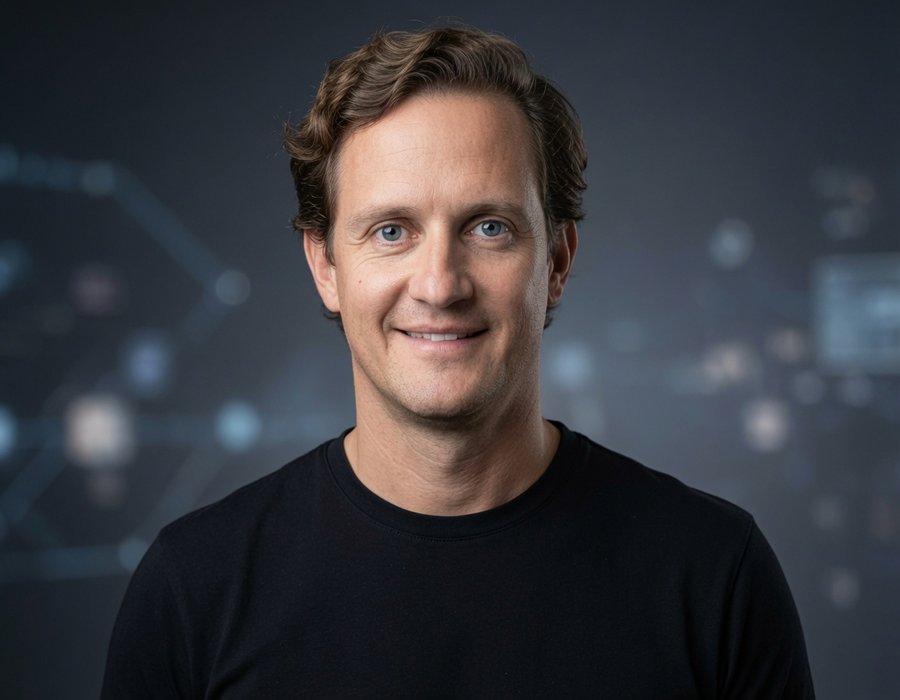
Jean. L, founder and CEO of AI Scanner. Photo: personal collection.
Ask a CIO how they choose an AI vendor and you will hear a version of the same answer. New platforms launch every week. Categories that did not exist last quarter now have a dozen players. And the shortlist has to be assembled by someone who also has a day job.
Jean. L heard that answer often enough to build something about it.
"Enterprise buyers are drowning," he says. "Every CIO, VP of Innovation, and procurement lead I've spoken to says the same thing: they can't keep up with the AI vendor market."
AI Scanner is his answer: a structured map of the enterprise AI landscape, built for people who have to make a six-figure decision and want to see the whole field before they do.
The night in Miami Beach
The origin story is short and he tells it well.
He was in bed, late, thinking about how the market was moving. Everyone was talking about ChatGPT, Anthropic, Gemini. Nobody, as far as he could see, was addressing the layer underneath: the thousands of AI platforms being built on top of those models, for real business use cases, that nobody could properly compare.
"I asked myself a simple question: does a real comparison platform exist, one dedicated specifically to AI? Not a generic tool directory. Not a sponsored ranking site. A genuine reference platform."
He had been looking, on and off, for weeks. That night it clicked. He got out of bed, opened GoDaddy and secured ai-scanner.com before going back to sleep.
"I didn't wait until morning. In markets moving this fast, the difference between an idea and a company is often the twelve hours you wait to secure the name."
The lesson he draws from it is not about domains. "It was about conviction. When you've done the research long enough to know something is missing, and the moment of clarity finally arrives, you act on it immediately, because that clarity is fragile."
The next morning he called Benjamin, his technical co-founder. AI Scanner became a company.
What is actually there
The platform indexes 2,020 AI companies across 19 industry sectors, organised into 658 categories. Each sector page holds somewhere between 98 and 175 listings, and every platform carries a score.
That scoring runs on a published formula: performance at 30%, usability at 25%, pricing value at 25%, versatility at 20%, each rated out of ten. The inputs are official documentation, public pricing, third-party benchmarks and product trials. Vendor-supplied material is explicitly not used as a primary source.
The category count is the part worth pausing on, because it is where the design decision lives.
"We built the 658-category framework iteratively over 12 months of indexing work, precisely because generic tags don't work when a market fragments this fast. A CIO looking for AI observability tools shouldn't have to wade through 300 'productivity AI' results."
That is a real distinction. Most directories in this space carry a few hundred entries with light metadata and a handful of broad tags, which is fine for someone browsing and useless for someone comparing within a narrow use case. AI Scanner is built for the second person.
Where the AI does the work
The subject matter is AI, but so is the machinery. Jean. L is specific about both places it sits.
The first is categorisation at scale. Maintaining a 658-category taxonomy across two thousand platforms by hand is not realistic for a small team, so large language models do the first pass.
"We use large language models (GPT and Claude) to parse vendor descriptions, extract functional attributes, and propose category assignments, which our editorial team then validates."
The second is watching the market. AI-assisted monitoring detects new platform launches, funding announcements and category shifts, and feeds them into the indexing pipeline so the directory does not go stale in a market where vendors appear weekly.
His summary of the division of labour is the cleanest line in the interview: "AI does the heavy lifting; human judgment does the validation."
How the money works
Two revenue lines, both visible on the site.
Buyers can browse the full directory, view scores and compare up to three platforms for nothing. Beyond that, a Benchmark Pro report costs $49 and adds a performance breakdown, compliance and security analysis, an integration compatibility report, a vendor comparison matrix and a PDF export.
On the other side, vendors can buy featured listings, sponsored content and partnership placements. Jean. L states the boundary he keeps between the two, and the site repeats it: sponsored content and paid placements are always labelled, the platform participates in affiliate programmes and may earn a commission on some links, and none of it is allowed to move a score.
"Category assignments, standardized platform information, and our directory structure are determined by editorial methodology," he says. "As we grow, we'll offer clearly labelled partnership opportunities, but the directory backbone will remain editorially governed."
For a business built on being a reference point, that separation is the whole asset, and it is the thing readers will judge over time.
The traction question, answered plainly
The US launch was in March 2026, and Jean. L does not stretch what that means.
"I'm not going to inflate traction numbers. We're at the launch stage of the U.S. market push, with the product live and functional and the go-to-market in its first quarter. Ask me the same question in six months and there will be much more to share on user, revenue, and partnership metrics."
What he does put on the table: 2,020 platforms indexed and live at launch, the 19 sectors and 658 categories deployed, an inaugural market analysis called The State of AI B2B 2026 covering age distribution, category growth and geographic concentration of the vendor market, and more than twenty companies who have written in asking to be featured without any advertising on his side.
That last number is the interesting one. Inbound from vendors before you have spent anything on reaching them is the earliest signal that a directory has been noticed by the people it indexes.
What comes next
US growth is the priority through the first quarter of 2027, with European and Asian expansion behind it. On the product side, the work is going into a deeper AI-powered discovery layer and turning the market analysis into an annual series.
He is looking for enterprise decision-makers willing to test the platform and say what is missing, AI companies interested in co-branded research or data licensing, and early conversations with investors who follow the discovery layer of the AI market.
The company is based in Miami, Florida.
AI Scanner is at ai-scanner.com.
Jean. L is on LinkedIn.
---
This is a Partner Story: a written interview with a company building with AI, submitted through Submit Your Story and published free of charge. Statements about the company's product, customers and results are its own. Building something with AI? Tell us about it.
Would you try this product?