Partner Story · in conversation with Sergey Karlov. This is a written interview submitted through Submit Your Story. The claims below are his own, presented as they were given to us. No payment was involved.
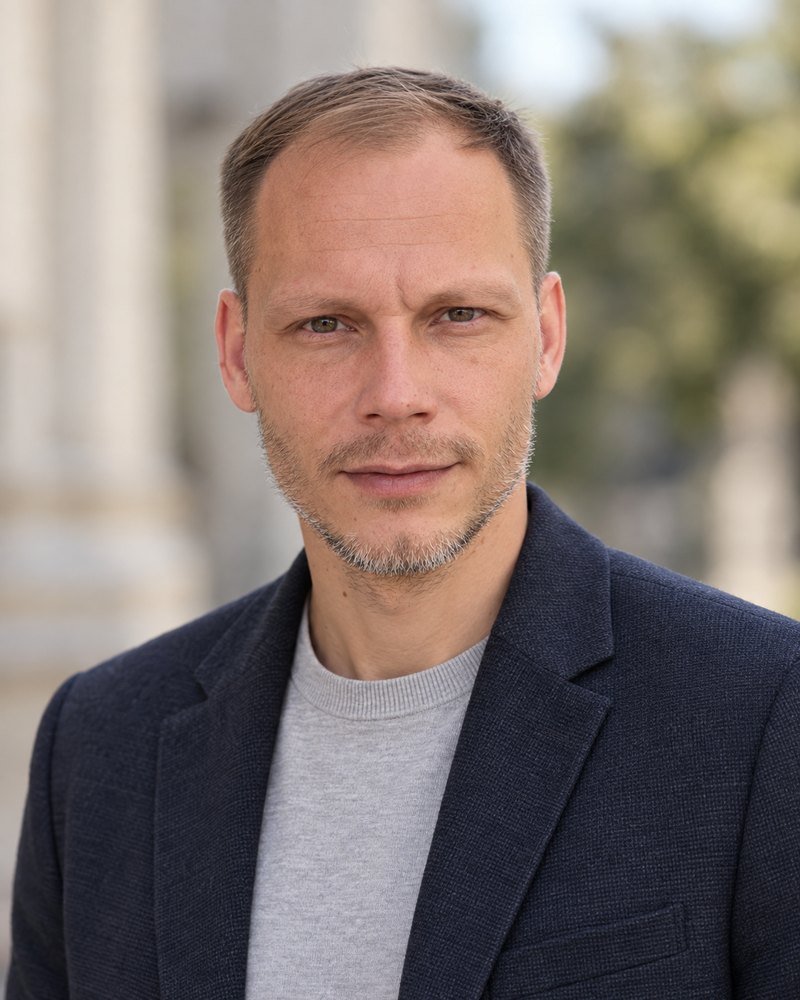
Sergey Karlov, who works as Serge Karloff. Photo: courtesy of the film-maker.
Science fiction is the genre that punishes small budgets hardest. Every frame wants something expensive in it: a set, a costume, a creature, a ship, a planet, and above all the visual effects to hold the whole thing together. It is the reason independent film-makers write dramas set in kitchens.
Sergey Karlov, who works as Serge Karloff, produced eight and a half minutes of it for about a thousand dollars.
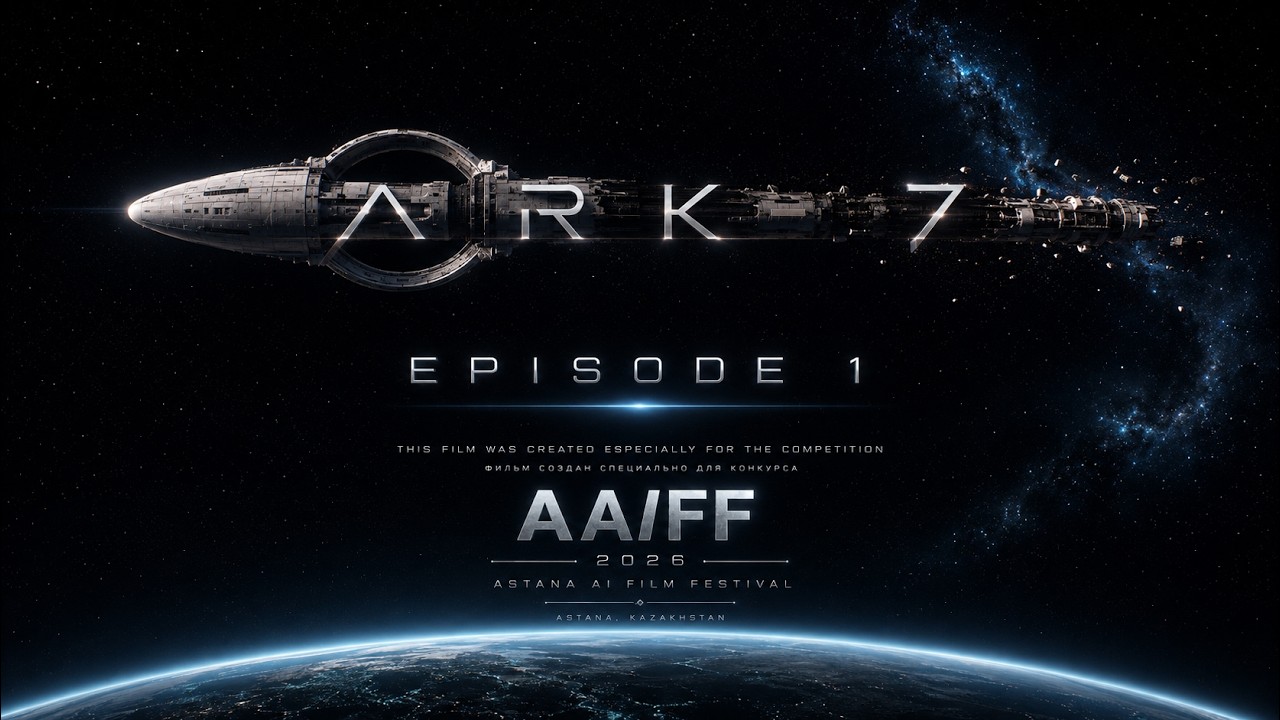
The pilot episode of ARK-7 went up on 29 August 2026. At the time of writing it has 1,178,325 views and 18,670 likes, which we checked rather than took on trust. The previous best video on his channel had around 34,000. This was not growth. It was a different order of magnitude.
The number that matters
"Episode 1 of ARK-7 cost approximately $1,000 to produce," he says. That covers model subscriptions and generation credits, image and video generation, upscaling, voice, music, and the editing and post-production software. On top of it went about one week of his own intensive work.
His estimate of the conventional alternative is deliberately unshowy. Reproducing the same eight and a half minutes with actors, a crew, locations, production design and that quantity of visual effects would push even a lean independent production into the tens of thousands of dollars, and a properly executed version with substantial VFX a good deal higher.
Then he makes the point that is actually interesting, and it is not the one about saving money.
"AI does not simply make an expensive shot cheaper. It changes which stories an independent creator is economically capable of attempting in the first place."
That is the difference between a discount and a new market. A cheaper camera lets you shoot the film you were already going to shoot. A thousand-dollar spaceship lets you write a script you would previously have thrown away on page one.
Where the AI actually sits
Karlov is precise about the distinction between tools and system, and it is the part most coverage of AI film-making misses.
The tools are ChatGPT Image for visual development and production assets, Higgsfield and Seedance for generative video, ElevenLabs for voice and dubbing, Suno for music where needed, and conventional editing and post-production to assemble it.
"But the important part is not the tool names. Tools change very quickly. What matters is the system around them."
The system is a set of references that persist: character references, environment masters, costume states, props, spacecraft, injuries, continuity records. A character is not regenerated from a text prompt each time they walk into a scene. If someone has an injury on the right side of the face, that becomes a state that has to survive into every subsequent shot.
"That repeatability is what turns generative video from experimentation into a production pipeline."
Anyone who has tried to make two consecutive AI shots of the same person will recognise the problem instantly. His answer is not a better prompt. It is the unglamorous discipline of a production department, rebuilt around generative tools.
The lesson
Asked what building this taught him, he gives an answer that will sound familiar to anyone running AI in production, in any industry.
"Generating the image is the easy part. Maintaining a world is the hard part."
A single beautiful shot is where most people stop experimenting. A series exposes an entirely different class of problem. The same face has to stay the same face. Clothes have to survive between scenes. Lighting has to make sense. A forest needs geography. A spacecraft cannot quietly redesign itself between two cuts.
"Those problems pushed me away from thinking like a prompt engineer and toward thinking simultaneously as a director, production designer, continuity supervisor and pipeline designer."
His fifteen years in photography, and years in video, design and creative direction including leading design at a bank in Cambodia, turn out to be the relevant qualification rather than the irrelevant one. He approached generative AI "not as a shortcut to random images, but as a production system."
From a film to a business
The second lesson arrived with the audience, and it arrived fast.
"I made Episode 1 as a pilot. I did not expect it to reach this scale so quickly. Once it did, I suddenly had to think about an entire season, distribution, contracts, copyright protection, likeness permissions, television, monetization and release strategy."
The full first-season story package is written. Episodes 2 and 3 are in production in parallel, deliberately, so there is a buffer rather than a scramble before each release. Future episodes run longer, roughly 14 to 20 minutes.
On distribution he names three conversations. He says a regional United States television network covering southern New Mexico and west Texas, which he gives as Paxelle Channel 6, approached him about broadcasting the series. He says he is working with a platform called DeepStories on paid early access to Episode 2, and discussing a subscription and exclusivity arrangement with MovieAtlas. Of the three, MovieAtlas is the one we could independently confirm exists: a curated AI-cinema platform with apps on both the App Store and Google Play. The other two we could not find, and we pass them on as his account rather than as verified facts.
His own read on what the views bought him is the sharpest line in the interview.
"The audience did not simply validate the film. It turned ARK-7 into something that distributors and platforms are willing to discuss commercially."
Notably, it has not turned into much paid client work as an AI Creative Director, and he is candid that this no longer looks like the point. "Increasingly I see the larger opportunity in owning and growing the IP itself rather than using the project only as a portfolio piece to win service work." A freelancer sells hours once. An owner of a world sells it repeatedly, which is the whole reason studios exist.
Real people in a synthetic world
One direction he is pushing is the use of real people, with permission, as characters.
"Purely synthetic AI faces can sometimes begin to feel visually interchangeable. When a character is based on a real person, the identity becomes much more specific."
The example he gives is Sofia, a young girl whose likeness is used with her mother's permission, and who becomes the youngest inhabitant of the ARK-7 universe keeping her own first name. A Kazakhstan-based archaeologist is planned to appear as a space archaeologist. Other conversations are open, including with public figures, none of them finalised, and we have left those unnamed here for that reason.
The model he describes is a hybrid: real identity and human consent on one side, AI-native production on the other. "Instead of replacing actors with anonymous synthetic people, AI can become a new way of placing real individuals inside worlds that would otherwise be impossibly expensive to build around them."
The stake on the table
ARK-7 is entered in the Open Competition at the Astana AI Film Festival, running 1 to 3 October 2026. That section carries five awards of $50,000 each, for character, direction, visual, story and concept, out of a festival fund that the organisers put at two million dollars in total.
So the thousand dollars and the week of work are currently sitting on a table with fifty thousand on the other side of it, alongside a television approach and two streaming conversations. Whether any of it lands is unknown, and this piece is published before the result rather than after it.
The open business question he states plainly: how to monetize a cinematic AI series while keeping ownership of the underlying intellectual property. He is testing paid early access, subscription revenue, television distribution and platform partnerships rather than assuming YouTube advertising is the answer.
"Long term, my ambition goes beyond ARK-7. I want to demonstrate that a very small AI-native studio can build original cinematic IP, maintain recurring characters and worlds, work with real people and their likeness rights, and release serialized entertainment with economics that previously would have required a much larger production company."
And then the line that explains why this is a business story rather than a film review:
"If that works, the interesting product is not only the series. It is the production model behind the series."
ARK-7 Episode 1 is on YouTube.
---
This is a Partner Story: a written interview about a project built with AI, submitted through Submit Your Story and published free of charge. Statements about the project, its audience and its results are its own. Building something with AI? Tell us about it.
Would you try this product?