Partner Story · in conversation with Noah Salas, founder of Elis AI. This is a written interview submitted through Submit Your Story. The claims below are the founder's own, presented as they were given to us. No payment was involved.
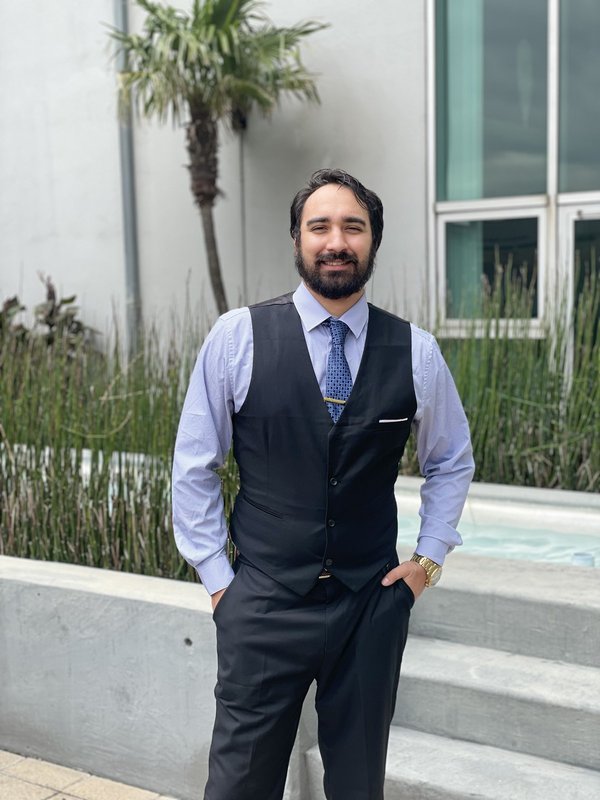
Noah Salas, founder of Elis AI. Photo courtesy of Noah Salas.
Noah Salas wanted to know whether a home computer could keep up with the frontier AI models people pay a monthly subscription for. All he had was his gaming PC, with about 20 GB of memory. Running a model at frontier level takes somewhere around 90 to 100 GB.
So he stopped trying to run one huge model. He split the work into smaller tasks instead. "I found that if I split up the tasks, I could answer at the same quality while using a fraction of the cost and the memory," he says.
That experiment became Elis Token Saver, the product of Elis AI, a company Salas runs alone from Houston, Texas. He is a full-stack and cloud engineer, and right now he is both the only engineer and the only salesperson. The legal entity is E-Commony LLC, doing business as Elis AI.
Paying frontier prices for routine work
The problem Salas set out to fix is simple to describe. Most AI tools send every request to their biggest, most expensive model, even the easy parts.
But a hard request, he points out, is mostly routine work: look something up, pull out the facts, format the answer. Only one or two steps genuinely need a frontier model. Teams still pay frontier prices for all of it.
"On an API that shows up as the bill," Salas says. "On a subscription it shows up as a limit you hit before the week is over."
He also sees a bigger reason it matters now. The industry is answering the demand for AI with hardware: memory is scarce and expensive, and data centres are going up as fast as the grid allows. "I think fitting each problem to the right model is part of the answer to both the RAM problem and the over-building of AI data centers," he says. "We can do a lot more with less if we learn to balance the load and fit each problem properly."
How Token Saver works
Token Saver plugs into the AI tools people already use, including Claude, ChatGPT, Codex, GitHub Copilot and Gemini CLI. Nothing changes for the person asking.
When a request comes in, Elis plans it as a short chain of tasks. It runs the independent ones side by side and sends each task to the smallest model that can finish it well. Only the step that needs real judgement goes to a frontier model.
The work runs on a mix of small and mid-size models from several providers. By token volume, the most used in production traffic through early September included Codestral, Llama 3.1 8B, Gemini 3.1 Flash-Lite, gpt-oss-120b, GPT-4o mini and Mistral Small.
Every run is graded, and the grades decide which agent, template, tool and model gets picked next time. A new strategy has to beat the current one on live traffic before it is allowed to carry real work.
Not a router
Salas is careful to separate Token Saver from model routers. A router, he explains, looks at the whole prompt and picks one model for all of it, sized for the hardest sentence in there. Token Saver splits the prompt into its real tasks and sizes each one on its own.
In September 2026, the company reviewed 13 routing and gateway products and, by its own account, found none that split one prompt into separately sized subtasks.
He also chose to judge models in context, together with the tool, agent and data they are actually working with, rather than by one average benchmark score. "A model in production never runs alone," he says, "so grading it alone tells you very little."
The numbers
The headline figure on the Token Saver site, $1,170.94 saved per user in 30 days, comes from Salas's own account. He is the heavy user it describes: about 29 plans a day, active on 15.5 days of a 30-day window. Priced at pay-per-token rates against a frontier flagship, the same work came out 80% lower. "That is one user, not an average," he says.
Across the whole platform, through 3 September 2026, inference cost was 93.86% lower than running the same 20.9 million tokens on a frontier-class model, calculated at catalogue prices rather than from invoices. Across 508 plans, the same work took 44.8% fewer tokens, which Salas puts at about 1.8 times the work from one subscription allowance. The company also estimates 62.65% less carbon for the same work, a figure modelled from token counts rather than metered.
Beyond his own account, three to four companies now use Token Saver daily as a pilot group. The plan is to roll it out across each company once the pilot proves itself, which would bring Elis to around 100 users in the next few months. New accounts get a free daily allowance, and a payment method is only needed once that allowance is used up.
Tokens are the wrong thing to watch
When Salas went looking, he found he was not the only one working on this. There are research papers and other builders on the same path. He points to researchers at NVIDIA and Georgia Tech who estimate that serving a 7-billion-parameter model is 10 to 30 times cheaper, in latency, energy and compute, than serving one with 70 to 175 billion parameters.
The lesson that surprised him most was about what to measure. In a small four-task study Elis published in August 2026, cost fell 36.3% while token volume rose 40.7%. Every provider counts tokens differently, Salas says, so Elis reports dollars.
The next milestone on the measurement side is a third-party benchmark: the harness is built to run standard public benchmarks through the full production system every month, and the first run is still ahead.
Building and selling alone
Next for Elis is turning the pilots into full rollouts and getting to around 100 users. Salas is looking for more pilot companies, channel partners such as GPU hosts and AI server integrators, advisors who have sold into regulated industries, and investors for a seed round. The company is bootstrapped.
Running it alone from Houston means he does the building and the selling. Most of the selling happens in person, at Houston AI meetups, hackathons and pitch events, and on LinkedIn.
Elis Token Saver is free to start at elistokensaver.com.
---
This is a Partner Story: a written interview with a founder building with AI, submitted through Submit Your Story and published free of charge. Statements about the company's product, users and results are its own. Building something with AI? Tell us about it.
Would you try this product?