Partner Story · in conversation with Kevin Zaugg, initiator of DINGS EXPERIMENT. This is a written interview submitted through Submit Your Story. The claims below are the founder's own, presented as they were given to us. No payment was involved.

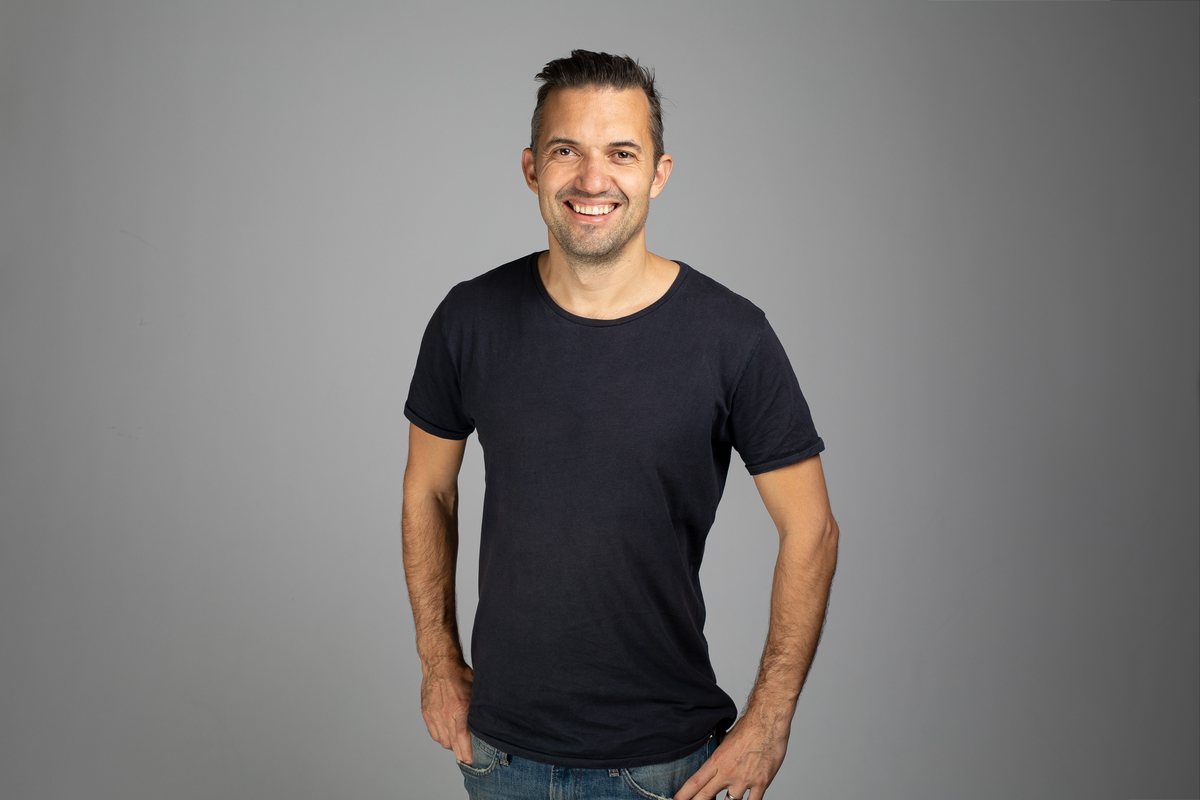
Kevin Zaugg, initiator of DINGS EXPERIMENT. Photo: Kevin Zaugg.
Most stories about building with AI end with a revenue number. This one does not have one yet, and that is the point.
Kevin Zaugg, a solo founder near Zurich, built DINGS EXPERIMENT almost entirely with ChatGPT. It is a public digital picture wall. Each numbered space on it, a pixel, costs one Swiss franc, and a buyer can place a photo or a logo there after review. The site works, payments go through, and the wall is live in eight languages.
What Zaugg does not have yet is one independent customer who found the wall and paid for a pixel. "I'm still asking ChatGPT for one tangible result," Zaugg says. "Help me find an independent customer willing to spend one Swiss franc."
Nights at a bistro website
Zaugg's road to AI started in a small restaurant. For about a year, Zaugg worked at a bistro in the Zurich area, run by people close to Zaugg, and worries about turnover filled the conversations at work and at home.
So after shifts, night after night, Zaugg worked on the bistro's website: updating texts, uploading pictures, trying to climb in Google. AI arrived through that work, first for pictures, flyers and menus. Zaugg proposed a CHF 20 monthly AI subscription for the bistro. The idea met resistance, the conflicts grew, and eventually Zaugg left.
"Today, with everything I've learned, I believe I could improve that website considerably," Zaugg says. "But it is no longer my responsibility."
Joining the boom
Around Zaugg, people questioned AI. Online, everyone seemed excited. Zaugg wanted in, and wanted to earn money with ChatGPT.
Long phone calls with a longtime friend who had moved to Thailand pushed the idea further. The two traded designs for shirts, caps, backpacks, books and fragrances. "But designs were not sales," Zaugg says.
DINGS became Zaugg's own project.
Two ChatGPT accounts and a Google Drive
The setup is a one-person software studio. Zaugg runs two ChatGPT accounts across a computer, a phone and a tablet, and coordinates their work through Google Drive.
ChatGPT wrote the website code, built the pixel grid, and integrated TWINT, the Swiss mobile payment app, and Stripe. It also produced the marketing materials. The unglamorous parts took the longest: pixel numbering, reservations that expire, preventing the same pixel from being sold twice, selecting pixels on a phone screen, rendering images and sending purchase confirmations. Zaugg also tried Gemini and NotebookLM along the way.
When Zaugg checked while preparing this interview, the ChatGPT usage display showed 21.3 billion tokens. Zaugg is careful about that number: it is unclear what the counter includes, or how much of it went into DINGS.
Zaugg is just as careful about savings. The project costs money for subscriptions, hosting and a domain, and a lot of time goes into supervising and correcting the AI. There is no advertising budget at all.
A product its own founder doubts
The most unusual thing about DINGS is its founder's honesty about it.
"I doubt the product myself," Zaugg says. "I'm not selling an AI course or promising riches. I'm testing whether ChatGPT can help me sell something I consider absurd."
The idea itself came out of frustration. For months, Zaugg asked ChatGPT for a working shop and a buy button. The answer kept coming back, in effect: "Kevin, you need a product. What do you want to sell?"
One evening Zaugg snapped back with something like: "Fine, I'll sell a damn pixel from my 4K television. I wouldn't even notice if one were missing."
ChatGPT took the sarcasm seriously and pointed to an earlier pixel-selling concept, the famous Million Dollar Homepage of 2005. Zaugg thought it was ridiculous. Who buys a pixel? Then the TWINT payment setup started working. That evening Zaugg tested a payment of ten Swiss centimes, followed later by more payments and refunds. The joke had become a shop.
411 emails in a day
Since then, most of the work has been selling, and this is where the experiment gets interesting for anyone building with AI.
Zaugg has approached companies, YouTubers, creators, startup networks and media in several countries. On November 24, 2026 alone, Zaugg's Gmail shows 411 outgoing messages: sales invitations, partnership enquiries and support replies.
Zaugg tried retail channels too, with a creative question behind it: could a one-franc pixel become a small add-on for shoppers just short of free shipping? Tutti.ch, a Swiss classifieds site, replied that advertising-style listings were not allowed. Amazon and Galaxus remain unconfirmed. Zaugg also tried Ricardo, eBay and Etsy.
SideProjectors featured DINGS on its homepage. Zaugg explored Product Hunt, Fourthwall merchandise and Fiverr services, published promotional videos in several languages, made an AI Battle video, posted on Instagram, TikTok and Facebook, and wrote to OpenAI, Google and Anthropic.
The result so far, by Zaugg's own account: no verified purchase from a new, independent customer that can be traced to any of these efforts. Early purchases, gifts and payment tests exist, but Zaugg does not count them as proof. Many replies are automated, negative or bounced.
The lesson: AI can build the shop, not the queue
Zaugg's story is a useful counterweight to the usual AI success post.
ChatGPT did what it promised on the building side. One person with no team and no advertising budget now runs a working multilingual shop with two payment systems, numbered inventory and protection against double sales. A few years ago that would have meant hiring a developer.
What ChatGPT could not do is create demand. Zaugg has repeatedly complained to OpenAI about contradictory answers, endless instructions and tasks reported as done that could not be verified. "What I wanted was income, not another plan," Zaugg says.
For anyone thinking of starting a business with AI, that is the honest takeaway. The cost of building has collapsed. The cost of finding a customer has not, and that part still has to be planned before the first line of code.
What's next
Zaugg will keep looking for retail distribution, improve the offer without extra spending, and ask potential customers why they would or would not buy.
The Million Dollar Homepage showed what media attention can do for a pixel wall, and Zaugg hopes readers will look at DINGS and judge it for themselves.
"I would love to be proven wrong about the pixel idea," Zaugg says.
The wall, and the next free pixel, are at dings-experiment.com. The project also posts on TikTok.
---
This is a Partner Story: a written interview with a founder building with AI, submitted through Submit Your Story and published free of charge. Statements about the project, its users and results are the founder's own. Building something with AI? Tell us about it.
Would you try this product?