
Partner Story · in conversation with Theodore Hildebrand, founder and CEO of HelveticAgent AI. This is a written interview submitted through Submit Your Story. The claims below are his own, presented as they were given to us. No payment was involved.
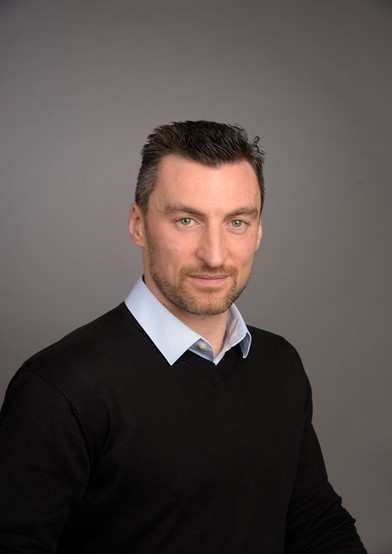
Theodore Hildebrand, founder and CEO of HelveticAgent AI, Baden. Photo: courtesy of Theodore Hildebrand.
Picture a fiduciary office with twelve people. Between them they hold the tax files, payroll and contracts of a few hundred clients. Every week someone asks which contract has the indexation clause, or what the firm filed for a particular client in 2023. Every time, someone opens the folders and looks.
A cloud AI assistant could answer in seconds. The firm is not allowed to use one.
"They are not allowed to put these files into a cloud assistant," says Theodore Hildebrand. "Professional secrecy, the Swiss Data Protection Act, GDPR for EU clients and now the EU AI Act's record-keeping and human-oversight duties."
The same is true for a law firm with privileged files and a clinic with medical records. So, in Hildebrand's words, the typical firm does nothing, or its staff quietly paste client data into a free chatbot.
HelveticAgent AI, his company in Baden, Switzerland, is built for exactly that firm.
Sixteen years inside the IT he now builds for
Hildebrand did not come to this from a pitch deck. For sixteen years he worked inside the kind of IT his product now replaces: as a database designer, hardware technician and system administrator in Paris, Bangkok, Taipei and Berlin. Then he spent two years as an IT and AI consultant for small companies, and that is where the idea came from.
He founded HelveticAgent AI in January 2026. For now, he says, he is also its IT administrator.
What he saw as a consultant was a gap. Sovereign AI, the kind that keeps data under the owner's control, already existed in Switzerland, but it was built for banks and government administrations, with budgets to match. Six-figure projects, integration programmes, IT departments. A twelve-person fiduciary had nothing.
"US cloud copilots are good and not sovereign," he says. "Swiss sovereign AI is built for enterprises. The corner we occupy, sovereign and SME-ready, was empty."
What changed, he says, is that Swiss open-weight models and Swiss datacentres have made a sovereign setup affordable for a small firm for the first time.
What the Box does
The product is the HelveticAgent Box: an AI document system that a firm runs on its own premises or in a Swiss datacentre.
It is document-first. A firm starts with the files it already has, without an integration project. Documents are loaded, classified and indexed in a Qdrant vector database inside the client's own perimeter. When someone asks a question in plain language, the system finds the relevant passages and the model writes the answer from them, with the passage it was taken from attached. "A fiduciary checks the clause instead of trusting the sentence," Hildebrand says.
The company's site goes one step further in honesty. Every answer is marked as supported by a source, in need of a check, or not found, and the site states plainly that a source citation helps a person check an answer but does not guarantee it is right. AI can be wrong; professional review stays with the firm.
The models doing the work are open-weight, which means the firm can run them on its own hardware. The main one is Apertus, the Swiss model built by EPFL, ETH Zürich and the Swiss National Supercomputing Centre, available in 8-billion and 70-billion-parameter versions under the Apache 2.0 licence. Mistral is the second option. They run directly on the Box through Ollama or vLLM, or, for the hosted option, through Infomaniak's AI tools in Swiss datacentres.
The order of preference is fixed: Swiss-hosted open models first, then self-hosted ones, then Mistral in the EU. American frontier models are used only under a zero-retention agreement, and Chinese models not at all.
What regulated firms actually buy
Hildebrand's point is that the model is not really what a law firm pays for. What it pays for is everything around the model.
Role-based access, so each person sees only what they are allowed to see. A gate that refuses to touch a client's files until that client's data processing authorisation is on record. Strict separation between clients, AES-256-GCM encryption of stored data, and a hash-chained audit log, in which every entry is linked to the one before it, so a record of what the AI did cannot be quietly changed afterwards. And an Approval Cockpit, where a named person reviews and approves the AI's output before the firm acts on it.
For a firm that may one day have to explain to a regulator or a client what its AI did with their file, that last part is the product.
The commercial side is designed the same way. Prices are public, in Swiss francs. The Starter edition, for one to five users, costs CHF 7,500 to set up and CHF 1,200 a month. Sovereign, for five to 25 users, is CHF 19,500 and CHF 2,900 a month. Larger teams start from CHF 49,000 and CHF 7,000 a month. A firm can begin with a ten-day workflow audit for CHF 3,900, which maps its processes, its data risks and an estimate of the return, or go straight to a four-week pilot for CHF 12,000: three to five users, three workflows, the firm's own documents and targets measured at the end.
The legal paperwork ships with the product: NDA, master services agreement, a data processing agreement with the GDPR Article 28 variant, a service level agreement, an acceptable-use policy, and extra terms for legal privilege, medical secrecy and banking secrecy. "A fiduciary should not need a lawyer to buy software," he says. There is also a free planning tool, the Client Studio, in German, French and English and without registration, plus an offline version that runs on a Windows laptop. A firm can rebuild its own workflows there before spending a franc: which documents the team needs and who may read them, what a summary or a draft answer should contain, and who checks, changes or rejects the result. The Studio itself sends no messages and takes no actions in the firm's systems.
Where the money is
The case for the Box is a simple comparison of hours.
In a reference run on a fixed set of synthetic test documents, Hildebrand says, the Box handled 2,088 document requests in 30 minutes that would have taken 440 hours by hand, with 99.9% of answers citing the right source.
He is careful about what that number is and isn't. "A reference run, not a client's figure, and we say so."
For a small firm, the arithmetic is still easy to follow. Hours spent opening folders are hours no one bills. A twelve-person office does not need many of them saved each month to cover a subscription.
Where it stands today
The Box launched on 17 September 2026, and Hildebrand is plain about the stage.
No firm runs it in production yet. The first three founding-client pilots are being negotiated now, in the Baden and Zürich area. The offer to those firms: the workflow audit is credited against the pilot, and the price is guaranteed for twelve months, in exchange for a reference and a case study.
There is no outside funding so far. The plan foresees CHF 4.5 million across a seed and a Series A round.
Ten questions, and a verdict he doesn't control
The most unusual part of the story is not the technology. It is how Hildebrand decided to prove it.
The checklist started as a defensive document. Prospects kept asking him the same ten things: where is my data, who can see it, what happens when the model is wrong, can I prove afterwards what the AI did. He wrote them down, one picture and one source for each, and in October published them as "Ten questions before an AI reads client files", a checklist for fiduciaries, law firms and clinics, with a free scoring rubric under a CC BY 4.0 licence. Each question is answered Yes, Partly or No, with tiers of evidence and a protocol for independent evaluation. Any vendor can be scored with it, including his own.
Then an AI evaluation engineer commented on the list: good questions, but how do European providers actually score?
"The IT administrator in me wanted to run the test myself," Hildebrand says. "That would have been worthless."
So he made the harder decision. He handed the verdict to someone with no reason to be kind. He sent the rubric to the evaluator, asked him to score HelveticAgent first, and accepted his conditions: the evaluator's thresholds and decision rules stay confidential, and only the evidence requirements and the possible results are public. The Meseray Institute is now preparing what it calls Run 0, scoring HelveticAgent against the ten questions and the twenty control cases of its Governability Benchmark, with no fee and no sponsorship. The protocol is frozen before the first session, and publication is planned for November 2026.
"The score will be his, not mine," Hildebrand says.
His lesson is one that anyone selling AI into a market built on trust could put on the wall:
"Your proof is only worth what it would cost you if it came back bad."
What comes next
The next ninety days, as Hildebrand describes them: the Run 0 results; version 1.1 of the rubric, with a possible eleventh question on independent verification; a practical guide mapping the EU AI Act's record-keeping and human-oversight articles for small firms; and the first founding-client pilots going live. In 2027 he wants to compare several sovereign AI products under one frozen protocol.
He is looking for founding clients among fiduciaries, law firms and clinics in Switzerland and the German-speaking region, for Swiss IT partners who already serve those firms, and for a seed investor "who understands that in regulated markets trust is the product".
HelveticAgent AI is at helveticagentai.com.
---
This is a Partner Story: a written interview with a founder building with AI, submitted through Submit Your Story and published free of charge. Statements about the company's product, performance, pricing and plans are its own. Building something with AI? Tell us about it.
Would you try this product?