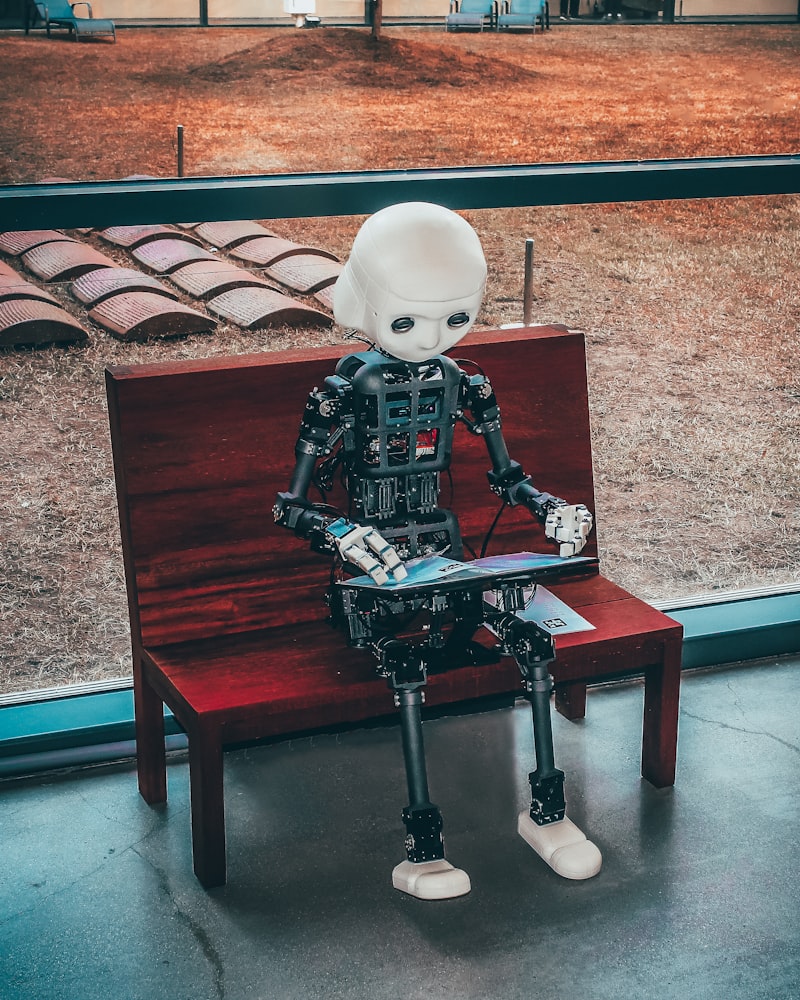
Robotics funding blew past $5 billion in 2025. Figure AI raised $675 million at $2.6 billion. Physical Intelligence pulled in $400 million. 1X Technologies got $125 million. The race to build general-purpose humanoid robots that work alongside humans in warehouses, factories, and eventually homes is no longer sci-fi, it's a funded reality.
The Key Players
Figure AI ($2.6B Valuation)
Building general-purpose humanoid robots for warehouses and manufacturing. Their Figure 02 robot walks, handles objects, and follows natural language instructions. Backed by Bezos, NVIDIA, Microsoft, and OpenAI.
The math: A humanoid robot costing $20,000-40,000 that does the work of a $40,000-50,000/year warehouse worker. If the robot runs 24/7, the economics are overwhelming.
Physical Intelligence ($2.4B Valuation)
Different angle, they're building the AI "brain" for robots, not the robots themselves. Their foundation model for robot control can plug into any hardware. Raised $400 million from Bezos, Thiel, and OpenAI.
1X Technologies ($1B+ Valuation)
Norwegian company building humanoid robots for security, industrial use, and eventually homes. Their NEO robot is designed to look and move like a human. OpenAI is a backer.
Boston Dynamics (Hyundai, $1.1B Acquisition)
The veteran. Atlas and Spot robots are already in commercial use for inspection and data collection. Now adding AI for more autonomous operation.
The Business Case
A warehouse worker costs:
- Salary: $40,000-55,000/year
- Benefits: $10,000-15,000/year
- Training: $2,000-5,000
- Workers comp: $3,000-5,000/year
- Total: $55,000-80,000/year
A humanoid robot (projected):
- Purchase: $20,000-50,000 (one-time)
- Maintenance: $5,000-10,000/year
- Electricity: $2,000/year
- Total Year 1: $27,000-62,000. Year 2+: $7,000-12,000/year
After Year 1, the robot runs at 10-15% the cost of a human worker, and it doesn't take breaks, sick days, or vacation. It works around the clock.
The scale: Amazon has 1.5 million warehouse workers. At $60,000 average total cost, that's $90 billion annually. Robots handling even 30% of those tasks? That's a $27 billion opportunity from one customer.
Where Robots Make Money Today
General-purpose humanoid robots are 2-5 years from mass deployment. But specialized robots are already pulling in serious revenue:
| Application | Revenue Today | Companies |
|---|---|---|
| Warehouse automation | $15B+ | Amazon Robotics, Locus, 6 River |
| Surgical robots | $7B+ | Intuitive Surgical ($7.2B revenue) |
| Agricultural robots | $5B+ | John Deere AI, Blue River |
| Delivery robots | $1B+ | Nuro, Starship, Wing |
| Cleaning robots | $3B+ | Brain Corp, Avidbots |
Intuitive Surgical's da Vinci robot does $7.2 billion a year. Each one costs $1-2 million, and the company sells consumables and services on top. That's the business model humanoid robotics companies are aiming for.
Timeline for Humanoid Robots
| Phase | Timeline | What Happens |
| Current | 2025-2026 | Pilot programs at BMW, Amazon, FedEx |
| Early deployment | 2027-2028 | Hundreds of robots in warehouses |
| Scale | 2029-2030 | Thousands of robots, price drops to $20K |
| Mass market | 2031-2035 | Millions of robots, home use |
Elon Musk says Tesla's Optimus will eventually cost $20,000-25,000, less than a car. Whether that timeline holds is anyone's guess, but the investment levels suggest the industry thinks it's possible.
For Investors and Builders
The thesis: If humanoid robots work (and billions in funding say investors believe they will), the market is measured in trillions, replacing a significant chunk of the $50+ trillion global labor market.
The builder angle: Every robot needs AI software, computer vision, NLP, motion planning, task planning. The AI skills developed for software (LLMs, reinforcement learning, computer vision) apply directly to robotics.
The risk: Robotics hardware is capital-intensive, timelines are fuzzy, and general-purpose humanoid robots remain unproven at scale. But the potential payoff justifies the bet for anyone with a long horizon.
Why This Matters
$5 billion+ in robotics funding in a single year. Backed by Bezos, Musk, NVIDIA, and OpenAI. Humanoid robots could become the largest AI market of all, potentially trillions in value if they can reliably do human work. Today's investment represents the early innings of what could be the most transformative shift since the industrial revolution.