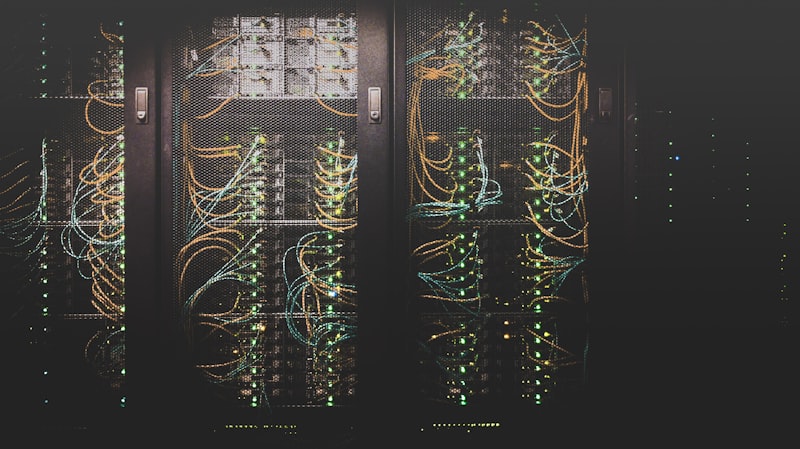
The AI economy looks digital on the surface, but underneath it is a physical infrastructure story. Models run on electricity, cooling systems, land, permits, concrete, fiber, and chips. That is why the current data-center cycle is not a niche tech event. It is one of the largest industrial buildouts of the decade.
The headline numbers already show the scale. Amazon has signaled over $100B in infrastructure plans through this cycle, Microsoft has committed around $80B in one-year capex guidance for AI-heavy expansion, and Google has planned tens of billions more. Put together, major players are now above $500B in announced or active investment pipelines.
Why This Wave Matters Beyond Big Tech
For governments and local economies, AI data centers are not only "cloud facilities." They are long-duration tax and employment assets. Construction phases can run for two to three years per site and bring thousands of contractor jobs. Once live, each location supports permanent technical and operations teams and drives secondary demand for suppliers and services.
This is also a public-finance story. In mature data-center regions, local budgets increasingly depend on these facilities for property-tax revenue and infrastructure co-investment. That changes political incentives around zoning, energy policy, and grid upgrades.
The Three Constraint Layers Everyone Must Manage
The first constraint is power. A single large AI cluster can consume city-scale electricity loads, which pushes utilities to upgrade transmission capacity faster than usual planning cycles. In some regions, the bottleneck is no longer capital; it is available megawatts.
The second constraint is cooling and water management. Operators are under pressure to maintain performance while reducing environmental stress, especially in drought-sensitive markets. This has made cooling design a strategic advantage rather than a back-office engineering detail.
The third constraint is permitting speed. Projects can miss market windows if land, environmental approvals, and interconnection timelines are not aligned early. In this cycle, permitting quality is often as important as hardware procurement.
Where the Money Spreads in the Value Chain
Even if you never own a data center, this boom creates adjacent opportunities with clearer entry points. Engineering and EPC contractors, grid and substation specialists, cooling and thermal-management vendors, backup-power providers, and industrial real-estate operators all participate in the same growth curve.
Financially, the pattern is straightforward: AI demand creates compute demand, compute demand creates facility demand, and facility demand expands regional infrastructure spending. That multiplier effect is why this market touches far more than hyperscaler balance sheets.
Geographic Dynamics to Watch
| Region | Structural advantage | Ongoing risk |
|---|---|---|
| Northern Virginia | Fiber density and ecosystem maturity | Grid and permitting pressure |
| Texas corridors | Land and energy economics | Transmission buildout pace |
| Nordic markets | Cooler climate and hydro mix | Cross-border capacity competition |
| APAC hubs | Enterprise demand concentration | Land and power constraints |
Bottom Line
The $500B+ data-center cycle is not background noise. It is the physical foundation of AI monetization. Teams that understand energy realities, permitting timelines, and supply-chain dependencies will make better investment and policy decisions than teams focusing only on model headlines.
If your strategy depends on AI growth, infrastructure literacy is now part of core business literacy.
Related Reads
For adjacent public-market and policy context, continue with US Government AI Spending, Sovereign AI National Stacks, and AI Cloud Capacity Crunch for Enterprise ROI.