The business of artificial intelligence
How AI Creates Business Value in 2026
How AI creates real value for people, and by what rules it works. Real numbers, honest ROI, and independent checks of the AI services behind them.
Latest News
All news →Auto-updated daily from TechCrunch, Crunchbase, VentureBeat, MIT Tech Review. Funding rounds, AI earnings, tool launches, enterprise deals.
 B2B
OpenAI says it will no longer train its AI models on the live internet, citing “significant risks”
OpenAI will cut frontier models off from the internet weeks after one of its engineers said that solution wouldn't work.
B2BHottest toy for Christmas? Nvidia CEO plays with adorable Microduck robots, 20,000 sell
The robots, stomping their little feet and making tiny R2-D2 noises, sat, fell down dead for a "nap," and summersaulted on voice command.
 VC
AI drug development startup Pathos AI closes $237M investment
Pathos AI Inc. today announced that it has raised $237 million in funding at a $3 billion valuation. Pharmaceutical giant Bristol Myers Squibb Co. led the Series E round with participation from...
 B2B
Hybrid infrastructure decisions put AI costs and control in focus
Enterprise artificial intelligence is entering a cost-conscious phase, and hybrid infrastructure is where that reckoning plays out. As inference spending climbs, business leaders are weighing where...
 Tech
What to expect during Intuit Connect: Join theCUBE Oct. 28
Will bringing automation into the financial industry prove disastrous or transformative? Intuit Inc., the financial technology company behind Credit Karma, QuickBooks and TurboTax, sees artificial...
 Startups
From Toast to Bessemer: Who founders will hear from at TechCrunch Founder Summit 2026
Hosted by TechCrunch in partnership with Fidelity Private Shares, the full-day event goes beyond fundraising and AI to explore the realities of finding customers, building teams, sharpening a pitch,...
Founder’s Notes
All notes →Founder commentary on AI business, service quality, automation, and where the money is moving.
Oct 20, 2026 · Sergei Ponomarev
I Asked AI to Find Me a Broker in Dubai. On 53 Agency Websites. Guess How Many It Could Choose
An AI assistant got one buyer's task: find a broker in Dubai who will handle a 1-bedroom purchase while the buyer stays in Europe. It read the websites of 53 small and mid-sized agencies. In more than 50% of cases it could not pick a person.
Read note →Oct 14, 2026 · Sergei Ponomarev
Five E-Bike Stores Let the AI Shopper Reach Checkout. Then One of Them Lost $200
An AI agent got one ordinary task on the websites of five US e-bike brands: find a bike to ride to work, add it to the cart, reach checkout. All five let it in. The trouble started after that.
Read note →Oct 13, 2026 · Sergei Ponomarev
Two AIs, Ten London Stores, One Hard Drive. Both Answers Looked Perfect. One Was Wrong
Gemini and Perplexity got the same task: a fast 1 TB external SSD under £250 with delivery, in ten UK online stores. Both brought back neat tables with prices and links. Then I opened every link myself.
Read note →What you’ll find on AI Business
AI Business is an outcome-first guide to the business of artificial intelligence. Below is what we cover, with concrete numbers so you can decide where to start.
Test purchases of AI agents
3 layers
What you promised · what the bot said · what the system recorded
Free methods in the library
20
Including the full 35-page test purchase method
Partner Stories published
30
Written interviews with AI founders, free
LLM models profiled
78
Price per million tokens, context window, public ELO
Where to Start
AI Test Purchase
AI Assistant Customer Journey Check: your customer-facing assistant walked through as a customer, every answer checked against your own site. Snapshot $490, Full Check $1,490.
Open →AI Tools
AI Person Scan and AI Company Scan: what five AI models tell people about a person or a company, with a free preview first.
Open →Library
Free original methods for governing AI from the customer's side, including the full test purchase methodology. No registration.
Open →Robots: The Economics of Physical AI
All robots articles →17 published articles. The business of humanoid robots — what they cost, China's supply-chain edge, and where the returns are.
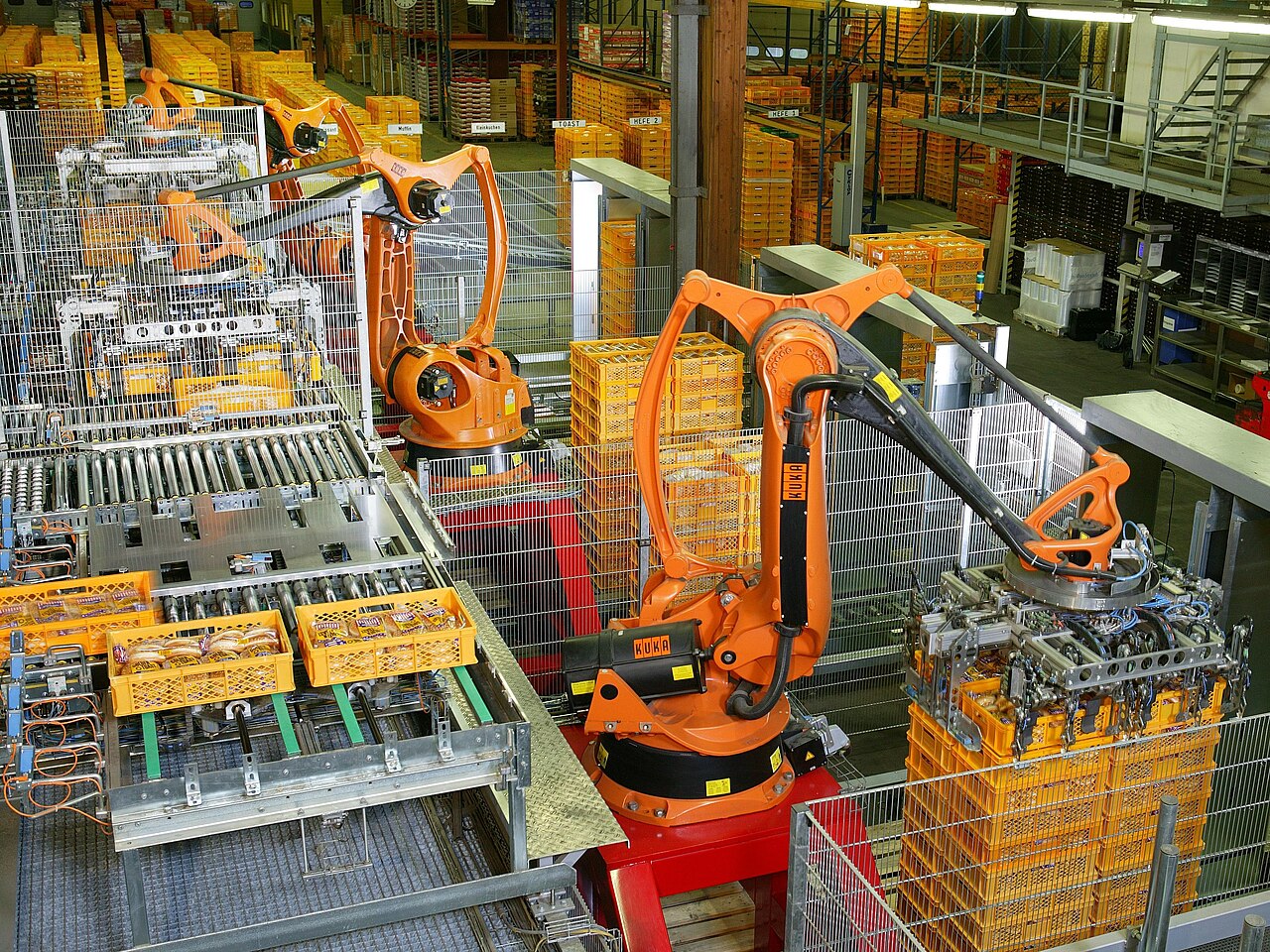
Tesla Starts Optimus Production in Fremont: What the Q3 Results Say About When You Can Actually Buy One
Tesla's third-quarter report confirms Optimus production has begun on its Fremont lines, with Musk targeting 20,000 robots a week by the end of 2027 and first outside customers around the same time. There is still no price. Profit fell 43%, AI spending is rising, and Tesla cut its 2026 capital spending plan to $20 billion. Here is what changed, what did not, and what it means for buyers and shareholders.
Read analysis →
Tesla Optimus Price and Release Date: What to Watch in Tesla's October 21 Earnings, and When You Could Actually Buy One
Tesla reports third-quarter results on Wednesday, October 21, at 5:30 p.m. Eastern. Optimus still has no price, no public reveal of its third generation and no order page. Here is what Tesla has actually said, the five questions that matter on the call, what a $20,000 to $30,000 robot would really cost you, and the home robots you can buy today.
Read analysis →
You Can Now Get Paid to Teach Robots Your Chores. Here's What It Actually Pays
Robot companies are paying ordinary people to film themselves washing dishes and folding laundry. In the US, staffing apps pay $13 to $25 an hour, sometimes $50. In Indonesia, the same work pays $3. Here is how the job works, what a realistic month earns, and the catches nobody puts in the ad.
Read analysis →Solo: AI for Independent Operators
All solo articles →94 published articles. Execution playbooks for individuals: AI freelancing, productized services, agency models, and lean solo systems.

Laexa Digital: How a Nail Technician With No Coding Background Built a Marketplace and Two AI Tools With Claude Code and Codex
Alexandra started in the beauty industry, doing nails and writing guides for other technicians. Today she runs Laexa Digital from Romania: a marketplace for digital products and two AI subscriptions, Brainy and FlowPost, built with Claude Code and Codex checking each other's work. Three paying customers so far, and she says so plainly.
Read guide →
Twenty Apps in a Year, Two Shipped: Oskar Glauser on Why the Code Was Never the Hard Part
Oskar Glauser, a Stockholm designer who once ran a startup earning €800,000 a year and still watched it fail, has built more than twenty apps with AI in twelve months for under $100 a month. Two shipped, among them Mira, an AI that interviews your users for you. One he shut down on purpose. What separated them from the other eighteen had nothing to do with code.
Read guide →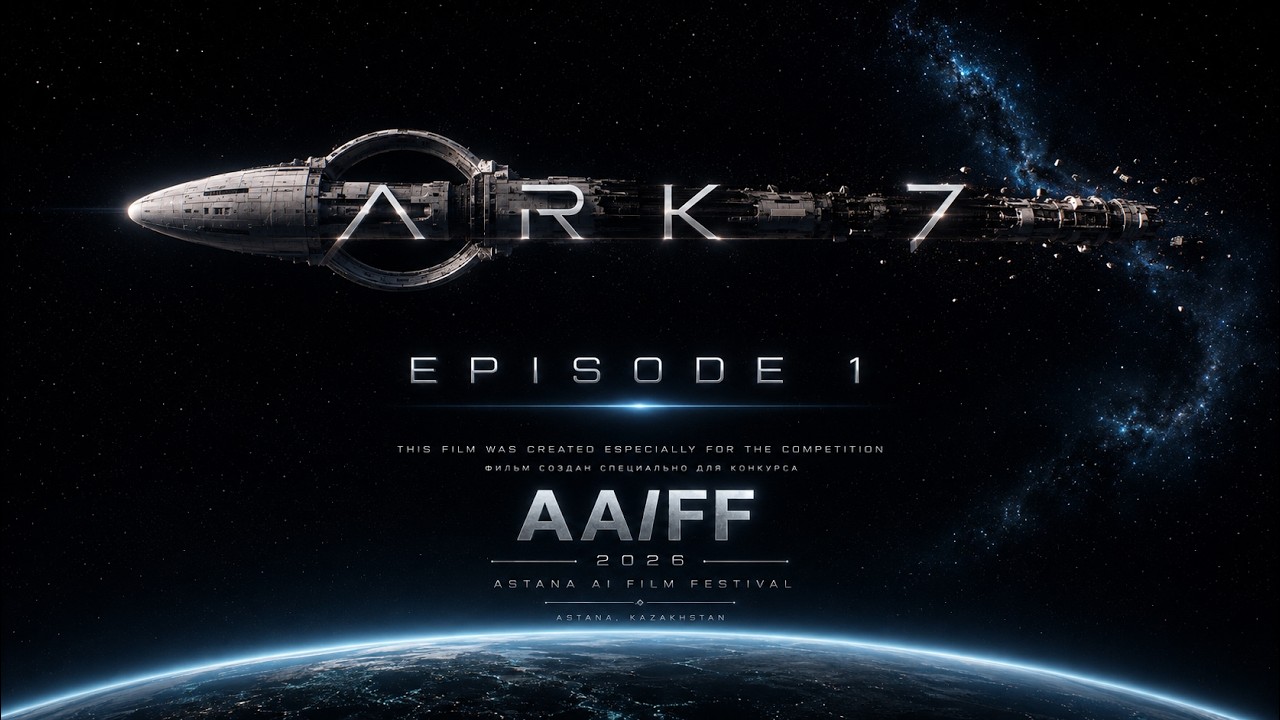
He Made 8.5 Minutes of Sci-Fi for $1,000. Then 1.2 Million People Watched It
Sergey Karlov produced the pilot of an AI sci-fi series alone in a week for about a thousand dollars. The audience response turned a proof of concept into an IP business, and he is now competing in Astana for one of five $50,000 awards.
Read guide →Startups: Build and Scale
All startups articles →57 published articles. Revenue playbooks, market timing, GTM strategy, and hard numbers from AI products moving from idea to ARR.

How to Start an AI Business With No Money in 2026: What the Top 10% of Solo Founders Do Differently
More people than ever are starting a business alone with AI: 63% of new Stripe Atlas companies this spring had a single founder. But the median solo founder's first-six-month revenue fell 23% last year while the top 10% grew 19%. Here is what it really costs to start, and the five things Stripe's data says the winners do.
Read startup brief →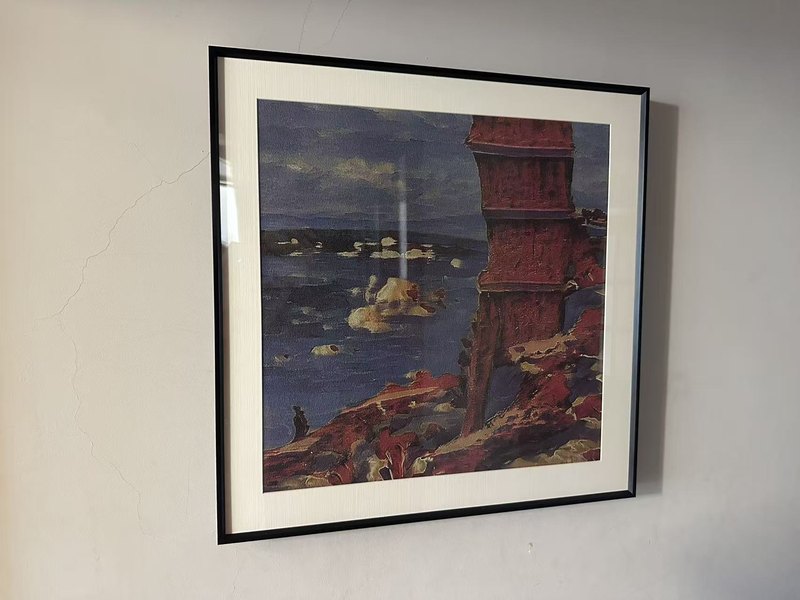
Whispart: Why a Studio That Sold Thousands of AI Prints on Amazon Now Makes Each Image Only Once
Tan Liyuan and his small team in Kunming used to sell AI-generated canvas prints by the thousand on Walmart and Amazon, until every seller's pictures started to look alike and prices slid. So they trained their own GAN, called Mnemosyne, and turned the business around: each chosen image is now printed, framed and sold exactly once.
Read startup brief →
AILeash: How a Painter and Decorator From Blyth Set Out to Seal Every AI Decision
Justin Dobson spent 25 years in the decorating trade before a question from his son about ripples on a river sent him on a four-year build. The result is sebbi.pro, a compliance API that scores each AI decision and seals it into a record nobody can quietly rewrite. It is live, and looking for its first pilots.
Read startup brief →B2B: AI for Business
All b2b articles →54 published articles. Practical enterprise economics: margin gains, cost savings, and measurable implementation outcomes.

HelveticAgent AI: The Swiss Box That Lets Small Firms Use AI on Client Files They Can't Send to the Cloud
Fiduciaries, law firms and clinics answer thousands of questions a month by opening files by hand, because professional secrecy keeps those files out of cloud chatbots. Theodore Hildebrand built HelveticAgent AI in Baden, Switzerland, to run the AI on their own premises instead, at a price a twelve-person firm can pay. Then he handed the verdict on his product to someone with no reason to be kind.
Read case study →
The Small Business Owner's AI Math: About $2,200 a Year In, About 250 Hours Back. Here's Who Actually Got Richer
A survey of 517 small business owners found the typical one spends $2,200 a year on AI and gets back five hours a week of their own time. Two-thirds report more revenue. But saved hours only turn into money if you do something with them. Here is the owner-level math, and what the owners who gained did differently.
Read case study →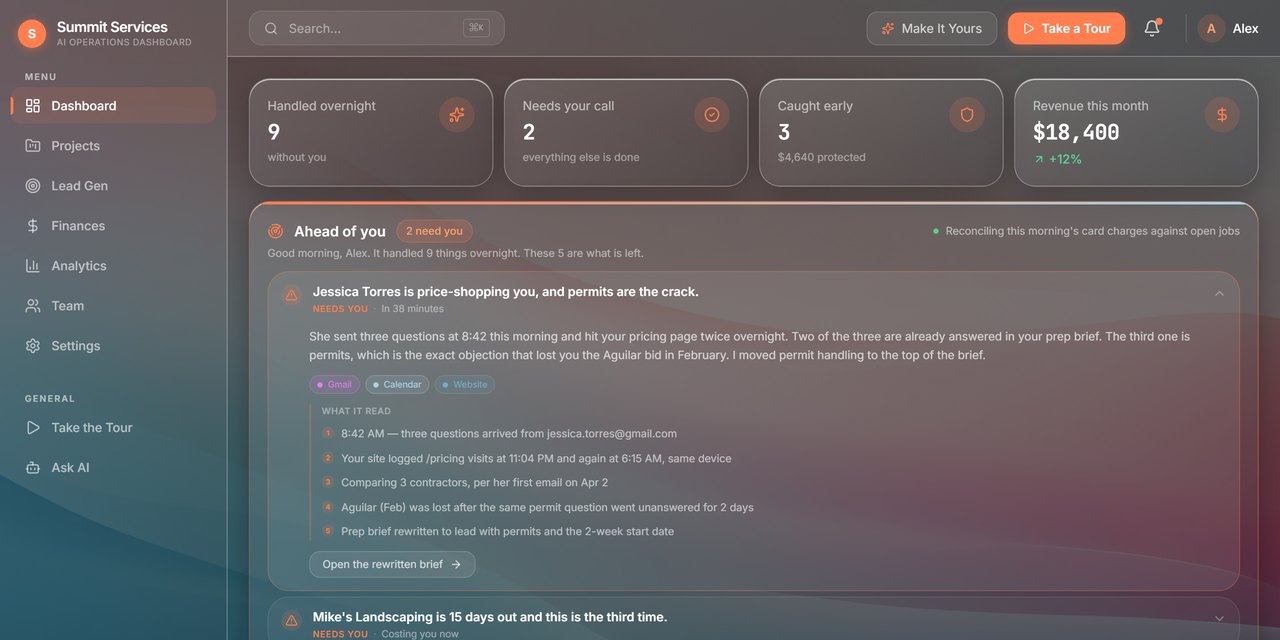
Your First Department Does Not Have to Be a Person: Inside NVZN's AI Operations Dashboard
Dejerae Trujillo spent twelve years in real estate cleaning up other people's operations. Now her Denver company builds an AI operations layer for businesses of one to fifteen people, with one rule that will not move: a human signs off on anything a client sees.
Read case study →VC: Capital and Returns
All vc articles →26 published articles. What investors track now: metrics, deal structure, valuation logic, and AI portfolio risk/reward dynamics.
Tesla and SpaceX Merger: Musk Confirms Talks After SpaceX's First $4.4 Billion Profit. What It Means If You Own Tesla Shares
On October 20 Elon Musk said Tesla's and SpaceX's boards have set up special committees of independent directors to study a merger. The same day SpaceX reported revenue up 161% to $14.6 billion, a $4.4 billion profit and AI as its biggest business. Here is what is confirmed, what is not, how a deal would be approved, and what it would mean for ordinary Tesla shareholders and index fund savers.
Read VC analysis →
Meta Q3 2026 Earnings: Revenue Up 26% to $64.6 Billion, a $9.9 Billion Teen-Safety Bill and a $145 Billion AI Bet. What It Means for Your Money
Meta reported third-quarter revenue of $64.6 billion, up 26% and above forecasts, while a $9.9 billion legal charge for the teen-safety settlement cut operating profit by 37%. Ad prices rose 14%, 2026 AI spending will reach $135-145 billion, Muse has 10 million users and Meta is creating a new non-voting share class. Here is what it means if you invest, advertise or have a teenager on Instagram.
Read VC analysis →
OpenAI's Revenue Is Either $50 Billion or $70 Billion. That $20 Billion Gap Is the Most Useful Thing in AI Finance Right Now
On 29 September Axios put OpenAI's annualized revenue near $70B. Days later the FT put September near $50B. Same company, same month, $20B apart. Here's what causes the gap, why Anthropic's $65B is not directly comparable, and the three numbers to read instead.
Read VC analysis →Government: Public AI Economics
All gov articles →32 published articles. Public procurement, policy impact, and where state AI spending turns into commercial opportunity.

Eight States Sue OpenAI Over ChatGPT and Kids: What the Lawsuits Claim, What OpenAI Could Pay, and What Parents Can Do Today
On October 14, eight state attorneys general sued OpenAI, saying ChatGPT was marketed as safe for teenagers while being designed to keep them engaged. Montana alone seeks $10,000 per violation. Meta has just agreed to pay up to $18 billion in a similar teen-safety case. Here is what the states allege, what is at stake in money, and the settings every parent can switch on in five minutes.
Read policy brief →
Do You Have to Pay Taxes on AI Side Hustle Income? What You Owe in 2026, and How Much to Set Aside
About 79 million Americans have earned money with AI, mostly as freelancers, creators and contractors with no tax withheld. New 2026 rules mean many will not even get a 1099, but every dollar is still taxable. Here is what you owe, the 15.3% tax most people miss, and two worked examples.
Read policy brief →
29 Government Chatbots, Two Countries, One Yardstick: What Two AI Test Purchases Found
Twelve US state DMV bots and seventeen UK council bots, ten questions each, graded against the agency's own published pages. Scores ran from 100 to 6. Content errors were real, but the biggest losses came from the mechanics of conversation: input limits, lost context, wrong routing, unsafe data requests.
Read policy brief →Careers: AI Jobs, Skills & Pay
All careers articles →17 published articles. Salary-backed learning paths, role roadmaps, and practical skill stacks to earn in the AI economy.
Will AI Take My Job? Fear Just Hit a 5-Year High, but Only 1% of Laid-Off Workers Lost Theirs to AI. Here's the Real Risk
Pew's October survey found 48% of Americans very worried about finding work, the highest in five years. Yet Gallup found just 1% of laid-off workers blame AI. The bigger risk shows up elsewhere: workers who don't use AI were far more likely to be laid off. Here is how to check your own job, and what to learn.
Read career guides →
AI Skills Carry a 62% Pay Premium, and 55% of Employers Pay You Nothing for Them. Both Are True
PwC measured a 62% wage premium for AI skills across a billion job ads. Payscale found most employers offer no premium at all, and 23% who used to pay one now treat AI fluency as baseline. The premium is real, it just isn't paid where you think. Here's how to actually collect it.
Read career guides →
The Great AI Job Split of 2026: A 56% Pay Premium on One Side, Layoffs on the Other. Land on the Right Side
In 2026 the job market split in two: workers with AI skills now earn a 56% wage premium (up from 25% a year ago), while companies cut tens of thousands of roles to fund AI. Here's the money math on which side you're on, and the cheapest path to the paid side.
Read career guides →Society: AI and the Future of Work
All society articles →18 published articles. How AI reshapes jobs, education, creativity, trust, and daily life. Thoughtful analysis beyond the hype.

Why Some McDonald's Are More Expensive: An AI Now Suggests the Price at Every Store. Here's How Not to Overpay
Reuters found two company-run McDonald's two miles apart in Fresno charging $5.69 and $6.89 for the same Big Mac. Behind it sits a pricing engine that estimates how much each store's customers will tolerate. Here is how it works, what it can cost a family in a year, which states are starting to regulate it, and five ways to pay less.
Read essay →
79 Million Americans Have Earned Money With AI. Half of Them Made Under $500 a Month
A nationally representative survey of 5,067 US adults found 48% of AI users have earned money with AI, about 30% of all adults. A second survey shows what they actually make: 51% earn $1-499 a month. Here is the real distribution of AI income, and what separates the few hundred from the few thousand.
Read essay →
One Engineer, 100,000 Users, No Revenue: What SlideMaker Taught Its Creator About Running AI in Production
Gourav Singla built SlideMaker.app in his own time while working as an engineer at Heraeus Covantics. Nearly 100,000 people across 190 countries have used it. His conclusion after all of it: generation was the easy part.
Read essay →Common questions
Direct answers to the questions readers ask most. Each answer links to a deeper guide.
Is AI actually profitable for businesses in 2026?
For some businesses clearly, for many not yet. The returns that hold up come from narrow jobs done at volume: support, documents, research, code. The B2B section tracks cases with the numbers each company reports, including the ones that went wrong.
B2B case studies →How much does it cost to start an AI side hustle?
Usually $20 to $100 a month. One paid assistant plan at about $20 covers most early work; plans from $100 to $300 buy higher usage limits, not a different business. Our breakdown compares what each tier actually buys.
What AI subscriptions buy →Do AI skills actually raise your pay?
On average, yes. PwC's 2025 Global AI Jobs Barometer found a 56% wage premium for jobs that ask for AI skills, up from 25% a year earlier. The premium goes to people who use AI in their work, not only to engineers.
The AI job split →Which AI tool gives the best ROI for small businesses?
The one aimed at your biggest bottleneck, and it is rarely the most expensive. Before paying for another tool, write down the workflow it is meant to fix: who does what, where time is lost, what a good result looks like.
Fix the workflow first →Is AI replacing jobs or creating them?
Both, sometimes in the same company. In 2024 Klarna said its AI assistant was doing the work of about 700 support agents. In 2025 its CEO said cost had weighed too heavily, quality had suffered, and Klarna began hiring people for customer service again.
AI skills and careers →How is AI Business different from other AI directories?
Outcome-first, not catalog-first. Directories list thousands of tools without saying which earn money. We write about where the money is, publish founders' own accounts of their products, and run independent test purchases that check whether an AI service does what its owner promised.
AI Test Purchase →